Azahari Hassim
What is the reason for the lesser popularity of the title “Servant of the Lord” in reference to Jesus, in comparison to the widely recognized title “Son of God,” despite the description given in the well-known book of Isaiah 42?
The lesser popularity of the title “Servant of the Lord” in reference to Jesus, in comparison to the widely recognized title “Son of God,” may be due to several reasons. One reason could be that the concept of a servant is not as commonly understood or revered in the same way as the concept of a son. In many cultures and religious traditions, the idea of a son implies a special and close relationship, while the concept of a servant may not carry the same connotations of significance.
Additionally, the title “Son of God” has been more widely emphasized and popularized in Christian theology and scripture, particularly in references to Jesus in the New Testament. This has contributed to its widespread recognition and acceptance among Christians.
Furthermore, there may be a tendency to focus on the divinity and special relationship of Jesus as the Son of God, rather than emphasizing his role as a servant. This emphasis on divine status may overshadow the significance of the title “Servant of the Lord” in some interpretations of Christian theology.
Overall, the lesser popularity of the title “Servant of the Lord” in comparison to “Son of God” may be a result of its historical and theological emphasis, as well as cultural and linguistic factors. Despite this, the concept of Jesus as the Servant of the Lord is an important and meaningful aspect of Christian faith, as highlighted in the book of Isaiah and other biblical texts.

Muhammad is identified as a servant of Allah in the Quran. There are those who posit that the reference to the servant of the Lord in Isaiah 42, specifically verse 11 which mentions Kedar, may be alluding to Muhammad. How do they present and support this argument?
Those who posit that the reference to the servant of the Lord in Isaiah 42, specifically mentioning Kedar, may be alluding to Muhammad, often present and support this argument based on several key points:
- Kedar’s Descendants: In Isaiah 42, verse 11, it mentions Kedar, who was the second son of Ishmael and, according to Islamic tradition, is considered the ancestor of the Arabs. The argument is that since Muhammad was an Arab, and he came from the lineage associated with Kedar, this reference could be an allusion to him.
- Characteristics of the Servant: The description of the servant in Isaiah 42 aligns with certain traits that are associated with Muhammad in Islamic tradition. The servant is described as bringing a new law, being a light for the nations, and engaging in conquest and warfare. Proponents of this argument argue that these attributes are consistent with the mission and actions of Muhammad.
- Similarities in Language and Prophecies: Some commentators draw parallels between the language used in Isaiah 42 and certain prophecies and descriptions related to Muhammad in Islamic sources. They argue that linguistic and conceptual similarities between Isaiah 42 and Islamic teachings support the idea that Muhammad is the servant referenced in the passage.
- Connection to Monotheism: Proponents of this argument also highlight the emphasis on monotheism in Isaiah 42, which they relate to the monotheistic message of Islam and the role of Muhammad as a carrier of the monotheistic faith in the Arabian Peninsula.
It’s important to note that this interpretation is based on a specific reading of the text and is subject to debate and interpretation within different religious traditions. Not all scholars or religious authorities agree with this perspective, and there are varied understandings of the meanings and implications of the servant mentioned in Isaiah 42. Different religious communities and denominations may have distinct interpretations of these passages based on their particular religious and theological frameworks.
In constructing a genealogy of Muhammad, the Islamic hagiographers traced his descent from Abraham and Ishmael through Kedar.
Zondervan Pictorial Encyclopedia of the Bible

Analyze Jesus and Muhammad in Abrahamic faiths through the concept of “Seed” in Genesis 22:18
Certain individuals argue that the reference to the “seed” in Genesis 22, verse 18, does not pertain to Jesus due to his words in Matthew 15, verse 24. Instead, they point to Muhammad based on Surah 21, verse 107. How is their argument articulated?
The argument that the “seed” mentioned in Genesis 22, verse 18, refers to Muhammad rather than Jesus is articulated by contrasting biblical and Quranic texts. Here’s how the argument is structured:
Genesis 22, verse 18, states:
“And through your offspring all nations of the earth will be blessed, because you have obeyed My voice”.
The Hebrew word used for “offspring” or “seed” is “zera”, which can be a collective singular noun, implying it could refer to a single individual or a group.
In Matthew 15, verse 24, Jesus says:
“I was sent only to the lost sheep of the house of Israel”.
This statement is interpreted by some to mean that Jesus’ mission was primarily focused on the Israelites and not on all nations directly. This interpretation is used to argue that Jesus was not the fulfillment of the promise in Genesis 22, verse 18, which speaks of a blessing to “all nations”.
Surah 21, verse 107 of the Quran states:
“And We have not sent you, [O Muhammad], except as a mercy to the worlds”.
This verse is interpreted to mean that Muhammad’s mission was universal, extending to all of humanity, which aligns with the promise in Genesis 22, verse 18, about blessing all nations.
The proponents of this view argue that since Jesus explicitly stated his mission was to the Israelites, he does not fulfill the universal aspect of the blessing promised in Genesis 22, verse 18.
In contrast, Muhammad is described in the Quran as a mercy to all worlds, which they believe aligns more closely with the promise of a blessing to all nations. Therefore, they conclude that the “seed” in Genesis 22, verse 18, refers to Muhammad rather than Jesus.
This argument hinges on the interpretation of Jesus’ mission scope in the New Testament and the universal mission attributed to Muhammad in the Quran.
There are some scholars who believe the prophethood of Muhammad is related to Abraham’s near sacrifice of Ishmael. Therefore, Muslims commemorate Eid ul-Adha or the Feast of Sacrifice. How is this argument articulated?
The argument that the prophethood of Muhammad is related to Abraham’s near sacrifice of Ishmael is based on the Islamic tradition that Abraham was commanded by God to sacrifice his son Ishmael, not Isaac as mentioned in the Bible.
This event is seen as a test of Abraham’s faith and obedience to God, and Ishmael’s willingness to be sacrificed is seen as a demonstration of his own faith and submission to God’s will.
In Islamic theology, this event is considered a precursor to the prophethood of Muhammad, who is seen as a descendant of Ishmael. The story of Abraham’s sacrifice is commemorated by Muslims during the Eid al-Adha, or the Feast of Sacrifice, which is one of the most important Islamic holidays.
The argument is articulated as follows:
- Abraham was commanded by God to sacrifice his son Ishmael, as mentioned in the Quran (Surah 37: 100 to 108).
- Ishmael was willing to be sacrificed, demonstrating his faith and submission to God’s will.
- This event is seen as a test of Abraham’s faith and obedience to God.
- The prophethood of Muhammad is related to this event, as he is a descendant of Ishmael.
- The story of Abraham’s sacrifice is commemorated by Muslims during the Eid al-Adha, which is a celebration of Abraham’s faith and obedience to God.
Therefore, the prophethood of Muhammad is seen as a continuation of the legacy of Abraham and Ishmael, and the story of Abraham’s sacrifice is seen as a precursor to the prophethood of Muhammad.
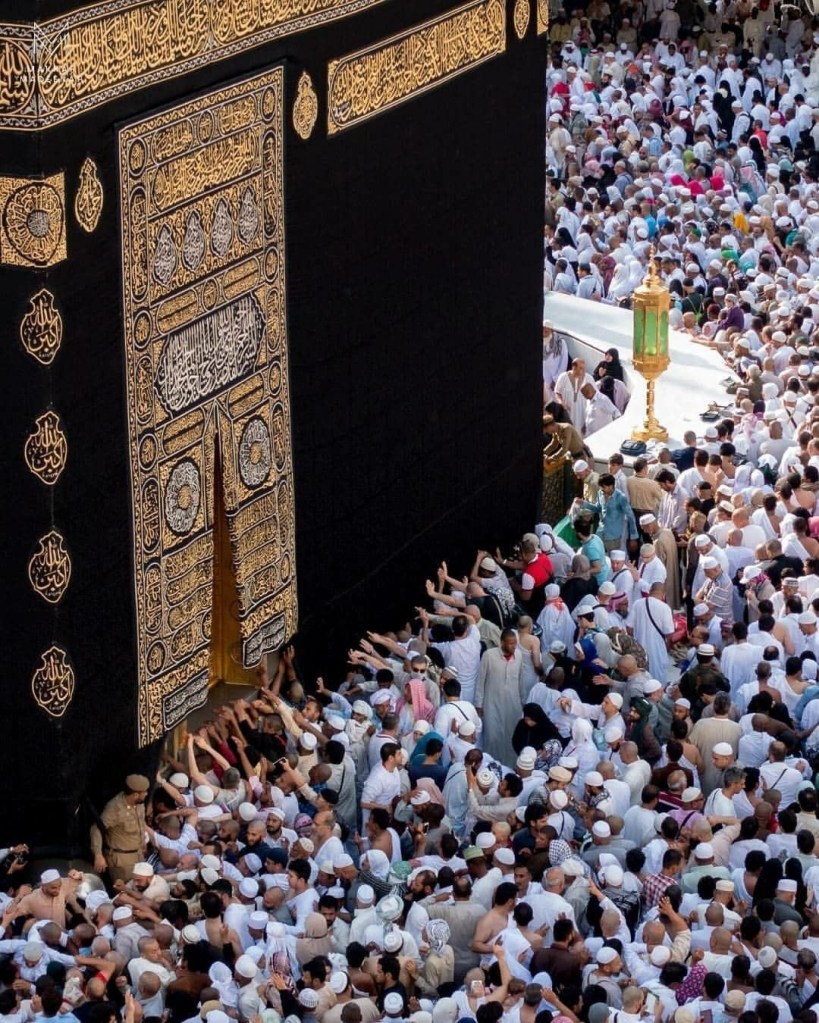
What is Eid al-Adha?
Eid al-Adha, also known as the “Festival of Sacrifice,” is one of the most significant Islamic holidays. It commemorates the willingness of Prophet Ibrahim (Abraham) to sacrifice his son Isma’il (Ishmael) as an act of obedience to God.
According to Islamic tradition, just as Abraham was about to sacrifice his son, God provided a lamb to sacrifice instead.
The holiday is marked by various rituals and traditions, including:
- Prayer: Special prayers are held in congregation, usually at a mosque or an open field.
- Sacrifice: Families who can afford it will sacrifice an animal, typically a sheep, goat, cow, or camel. The meat is then distributed among family, friends, and those in need.
- Charity: Emphasizing the importance of helping others, Muslims give to charity and ensure that everyone can partake in the celebration.
- Gatherings and Feasts: Families and communities come together to share meals, celebrate, and enjoy each other’s company.
Eid al-Adha is celebrated on the 10th day of Dhu al-Hijjah, the last month of the Islamic lunar calendar, and it coincides with the pilgrimage to Mecca known as Hajj. Muslims who are performing Hajj experience this holiday in a particularly special way.
 ABRAHAMIC THEOLOGY