Azahari Hassim
Some believe that Surah 2, verse 129 and 133 of the Quran points to Muhammad as the “Shiloh” prophesied by Jacob in Genesis 49, verse 10. How is this argument articulated?
The argument that Surah 2, verses 129 and 133 of the Quran point to Muhammad as the “Shiloh” prophesied by Jacob in Genesis 49, verse 10, is articulated through several points:
- Surah 2, verse 29, reads:
“Our Lord, and send among them a messenger from themselves who will recite to them Your verses and teach them the Book and wisdom and purify them. Indeed, You are the Exalted in Might, the Wise.”
This verse mentions a prayer by Abraham and Ishmael for a messenger to be sent among their descendants, which Muslims believe refers to Muhammad. This is seen as a continuation of the Abrahamic prophetic tradition.
- Surah 2, verse 33, reads:
Or were you witnesses when death approached Jacob, when he said to his sons, “What will you worship after me?” They said, “We will worship your God and the God of your fathers, Abraham and Ishmael and Isaac – one God. And we are Muslims [in submission] to Him.”
This verse mentions Jacob asking his sons whom they will worship after his death, and they affirm their worship of the God of their forefathers, including Abraham, Ishmael, and Isaac. This is interpreted as a testament to the continuity of monotheism and the prophetic mission culminating in Muhammad.
- In Genesis 49, verse 10, Jacob states:
“The sceptre shall not depart from Judah, nor a lawgiver from between his feet, until Shiloh come; and unto him shall the gathering of the people be.”
This biblical verse speaks of a ruler from Judah until “Shiloh” comes, interpreted by some as a messianic figure. The argument posits that Muhammad, as a descendant of Abraham through Ishmael, fulfills this prophecy by bringing a final and universal message.
These points collectively argue that Muhammad is the awaited “Shiloh” who brings the final divine guidance, aligning with the Quranic narrative of prophetic succession.
Midrash Rabbah
In Genesis Rabbah, a classical collection of Jewish homiletical interpretations, “Shiloh” is also understood messianically. The Midrash associates “Shiloh” with the coming of the Messiah, who will bring peace (since the word “Shiloh” is linked to the Hebrew word for peace, “Shalom”).
Muhammad, Torah and Hebrew prophets
Does Hagar’s prophecy in Genesis 21, verse 18, predate the Torah given to Moses?
Yes, Hagar’s prophecy in Genesis 21, verse 18, predates the Torah as given to Moses. The Book of Genesis, which includes the story of Hagar, is considered part of the Torah (the first five books of the Hebrew Bible) and traditionally attributed to Moses.
However, the events described in Genesis, including Hagar’s encounter with God and the prophecy concerning her son Ishmael, are believed to have occurred long before the time of Moses, around the patriarchal period.
The narrative in Genesis 21 describes Hagar and Ishmael in the context of Abraham’s family and is thus seen as part of the pre-Mosaic tradition. The Torah, or Pentateuch, as a compilation and codification, is generally understood to have been formalized during the time of Moses, which occurs much later in the biblical timeline.
Therefore, the events and prophecies in Genesis can be considered as part of the earlier history before the giving of the law to Moses.
What is the argument put forth by those who support the idea that the prophethood of Muhammad is linked to Hagar’s prophecy, which predates the Torah, in contrast to Hebrew prophets who are associated with the Torah? Consequently, Muhammad, in contrast to Hebrew prophets such as Jesus, is not bound by the laws of the Torah.
Supporters of the idea that the prophethood of Muhammad is linked to Hagar’s prophecy, which predates the Torah, argue that this connection sets Muhammad apart from Hebrew prophets who are associated with the Torah. Here is a detailed explanation of their argument:
- Pre-Torah Origins of Hagar’s Prophecy: Proponents argue that Hagar’s prophecy, as mentioned in Genesis 21, verse 18, predates the Torah given to Moses. This prophecy concerns Hagar’s son, Ishmael, who is promised to become a great nation. This predates the formalization of the Torah, which is traditionally attributed to Moses and his time.
- Reiteration and Fulfillment in Islamic Rituals:
The Torah reiterates Hagar’s prophecy, but its fulfillment is seen in Islamic practices, particularly the Hajj pilgrimage. The Hajj, which involves rituals connected to Hagar and Ishmael, is viewed as a direct link to their legacy. This pilgrimage is a central practice in Islam, signifying the prophecy’s fulfillment and its importance in Islamic tradition.
- Marginalization by Ancient Israelite: Scribes It is suggested that ancient Israelite scribes attempted to downplay the significance of Hagar and Ishmael due to theological and political reasons. This marginalization aimed to elevate the prominence of Isaac and the Israelite lineage over Ishmael. The argument posits that the biblical narrative was shaped in a way that selectively emphasized aspects favorable to the Israelite lineage.
Contrast with Hebrew Prophets
- Association with the Torah: Hebrew prophets are closely linked to the Torah, which is seen as the foundation of their prophetic authority. The Torah, given to Moses, contains the laws and ethical teachings that Hebrew prophets were tasked with interpreting and enforcing. This connection establishes a continuous line of prophetic tradition rooted in the Mosaic covenant.
- Muhammad’s Independent Prophetic Lineage: In contrast, Muhammad’s prophethood is associated with the Abrahamic covenant through Ishmael, rather than the Mosaic covenant. This distinction is significant in Islamic theology, which views Muhammad’s message as a continuation and fulfillment of the Abrahamic faith, independent of the Mosaic laws. This perspective underscores the universality of Muhammad’s revelation, intended for all humanity, rather than being confined to the specific legal and ritual practices of the Jewish people.
Theological Implications
- Universal Prophetic Tradition: By associating Muhammad with a prophecy that predates the Torah, supporters argue that prophetic messages have been universal and ongoing throughout human history. This places Islam within a broader, inclusive prophetic tradition that transcends Jewish ethnic and religious boundaries. It emphasizes the continuity of divine guidance from the time of Abraham through to Muhammad.
- Distinct Covenants: The argument also highlights the existence of distinct covenants in the Abrahamic religions. While the Hebrew prophets operate under the covenant of Moses and the Sinai revelation, Muhammad is seen as part of the covenant given to Abraham and Ishmael. This theological distinction reinforces the idea that different prophetic traditions are validated by separate covenants within the broader framework of Abrahamic faiths.
In summary, the argument linking Muhammad’s prophethood to Hagar’s prophecy emphasizes its pre-Torah origins, fulfillment in Islamic Hajj, and the marginalization of Hagar’s significance by ancient Israelite scribes. This perspective contrasts Muhammad’s universal and independent prophetic lineage with the Hebrew prophets’ association with the Torah, highlighting distinct covenants and a broader prophetic tradition.
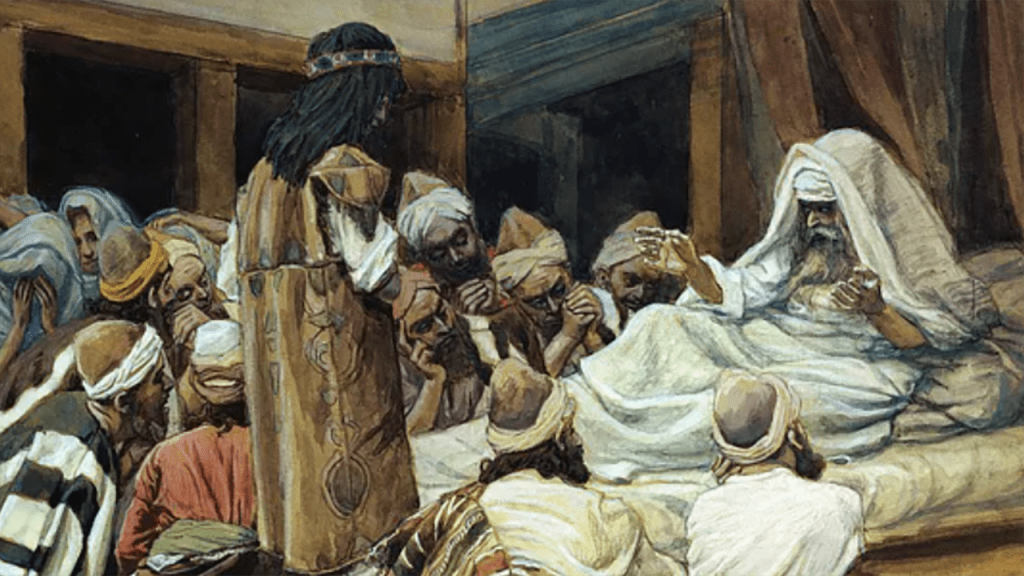
In Genesis 48-49, Jacob’s final words to his sons included descriptions (judgments) of their characters and prophecies about their futures. It is here that we find out that God planned the double portion blessing for Joseph’s sons and a special blessing for Judah—Jacob’s fourth son.
Two covenants: Abrahamic and Sinai covenants from an Islamic perspective
From an Islamic perspective, the word “Shiloh” in Genesis 49, verse 10, is connected to the Abrahamic covenant through Ishmael, who, not Isaac, is believed to be nearly sacrificed. Conversely, the terms “scepter” and “lawgiver” mentioned in Genesis 49, verse 10, are associated with the Sinai covenant. How is their argument articulated?
From an Islamic perspective, the interpretation of Genesis 49, verse 10, and its connection to the Abrahamic covenant through Ishmael involves several key arguments:
1. Shiloh as Muhammad:
Some Islamic scholars interpret “Shiloh” as a reference to Prophet Muhammad. They argue that the prophecy indicates a shift in divine authority away from the line of Judah to a descendant of Ishmael.
2. Abrahamic Covenant through Ishmael:
Islamic tradition holds that it was Ishmael, not Isaac, who was nearly sacrificed by Abraham. This is seen as a pivotal moment in the Abrahamic covenant, establishing Ishmael’s line as the inheritors of God’s promise.
3. Scepter and Lawgiver:
The terms “scepter” and “lawgiver” in Genesis 49, verse 10, are associated with the Sinai covenant given to Moses. Islamic interpretation suggests that these symbols of authority and divine law would remain with the descendants of Judah until the coming of “Shiloh” (Muhammad).
4. Transfer of Authority:
The verse is interpreted to mean that the religious and political authority (“scepter” and “lawgiver”) would depart from Judah’s line when Shiloh (Muhammad) comes. This is seen as a prophecy of the transition of divine guidance from the Israelite tradition to Islam.
5. Gathering of the People:
The phrase “unto him shall the gathering of the people be” is interpreted as referring to the universal message of Islam brought by Muhammad, which would unite people from various nations and backgrounds.
6. Continuation of Abrahamic Legacy:
Islamic scholars argue that Muhammad, as a descendant of Ishmael, fulfills this prophecy by bringing the final revelation that completes and supersedes previous covenants, while still maintaining continuity with the Abrahamic tradition.
7. Non-Judahite Messiah:
Some interpretations suggest that the verse implies the coming of a messianic figure from outside the tribe of Judah, which aligns with the Islamic view of Muhammad’s lineage through Ishmael.
It’s important to note that this interpretation is specific to Islamic theology and is not accepted in Jewish or Christian exegesis. The Islamic perspective sees this verse as one of many biblical passages that they believe foretell the coming of Prophet Muhammad and the establishment of Islam as the final Abrahamic faith.
 ABRAHAMIC THEOLOGY