Azahari Hassim
The term “Messiah” signifies the anointment of an individual with consecrated oil, designating them as God’s representative. Who in the Old Testament is anointed with sacred oil to be God’s messiah?
In the Old Testament, the term “Messiah” refers to anointed individuals who were consecrated with sacred oil to serve as God’s representatives. This anointing was a sign of being chosen by God for a special role or mission. The concept of “Messiah” is primarily associated with three types of figures:
- Priests: The first time the word “Messiah” appears in the Old Testament is in the context of priests, specifically in the Book of Leviticus, where the role of the priest in offering sacrifices for sin is described.
- Kings: Kings were also anointed with oil when they were consecrated. For example, Samuel the prophet poured oil on the head of Saul, Israel’s first king, and David, Israel’s second king. This anointing signified their role as leaders chosen by God to rule over the people.
- Prophets: While prophets were typically anointed by God with the Holy Spirit rather than with oil, there is an exception with the prophet Elisha, who was anointed with oil by Elijah as his successor.
These anointings with oil symbolized the presence of God’s spirit and blessing upon these individuals, setting them apart for their divine responsibilities.
The anointing of priests, kings, and prophets with sacred oil was a significant ritual in the Old Testament, marking them as “messiahs” or “anointed ones” in their respective roles.
The term “Messiah” in the Old Testament is thus not limited to a single individual but applies to various people anointed for specific roles by divine command.
Geza Vermes (Renowned Scholar of the Dead Sea Scrolls)
“The Dead Sea Scrolls reveal that the Qumran community expected two Messiahs: one a priestly Messiah of Aaron, and the other a royal Messiah of Israel. This dual expectation highlights the community’s anticipation of both spiritual and political deliverance.”
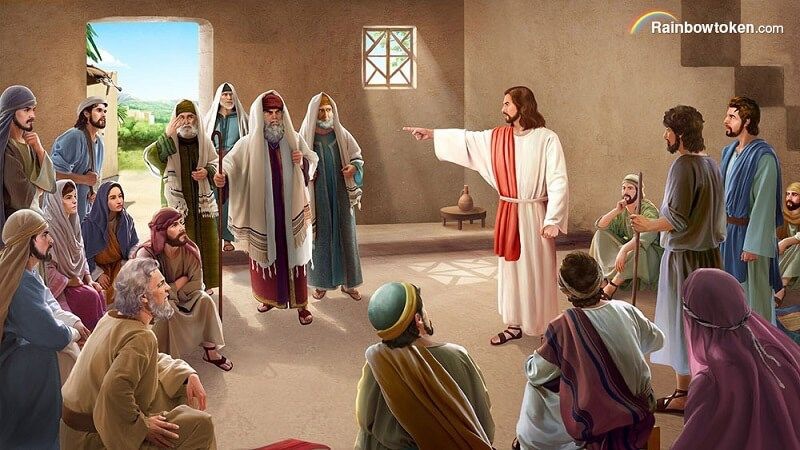
There is a belief that Jesus was a messiah in the same sense as other messiahs before him. Scripturally, Jesus was not the apocalyptic messiah who was predicted by the Hebrew prophets to establish God’s kingdom in the Holy Land. Could you kindly provide an explanation for the meaning of the preceding statement?
The belief that Jesus was a messiah in the same sense as other messiahs before him refers to the idea that he was seen as a savior figure who would bring about spiritual redemption and salvation. In this context, messiah is understood as a leader or deliverer chosen by God to fulfill a specific role in the divine plan.
However, scripturally speaking, Jesus was not the apocalyptic messiah that many Jews were expecting based on the prophecies found in Hebrew scriptures. The traditional Jewish understanding of the apocalyptic messiah was of a powerful political and military leader who would liberate Israel from its enemies, establish God’s kingdom on earth in the Holy Land, and rebuild the Holy Temple in Jerusalem.
Jesus’ teachings and actions did not align with these expectations of a conquering warrior king. Instead, he preached about love, forgiveness, and spiritual transformation. He emphasized inner righteousness over outward displays of power. This led many Jews to reject Jesus as their expected messiah, that is, the apocalyptic messiah.
In Christian theology, Jesus is believed to be the fulfillment of Old Testament prophecies in a different way than what was traditionally expected. Christians see Jesus as the ultimate savior who brings salvation through his sacrificial death and resurrection, rather than through political conquest.
So, when it is said that Jesus was not the apocalyptic messiah predicted by Hebrew prophets to establish God’s kingdom in the Holy Land, it means that his role and mission were different from what many people at that time were anticipating based on their interpretation of scripture.
“The concept of messianism in the Dead Sea Scrolls is complex and multifaceted. It includes expectations of a Davidic king, a priestly figure, and even a prophet like Moses, reflecting a diverse and rich messianic hope within Second Temple Judaism.”
John J. Collins (Biblical Scholar and Professor of Old Testament Criticism and Interpretation)
Does the Quran mention Muhammad as the Messiah whom the Jews await?
In the Quran, Muhammad is not explicitly referred to as the Messiah whom the Jews await. However, there is an indirect mention in Surah 2, verse 89, that can be interpreted in this context.
Surah 2, verse 89, states:
“And when there came to them a Book from Allah confirming that which was with them – although before they used to pray for victory against those who disbelieved – but [then] when there came to them that which they recognized, they disbelieved in it; so the curse of Allah will be upon the disbelievers.”
This verse is believed by some scholars and interpreters to refer to a prophecy mentioned in Jewish scriptures about a future prophet who would come after Moses. According to this interpretation, the Jews were awaiting this promised prophet or Messiah.
Muslims believe that Muhammad is the final prophet sent by Allah and consider him as fulfilling various prophecies mentioned in previous religious texts. Therefore, some Muslims interpret Surah 2, verse 89, as indirectly referring to Muhammad as the awaited Messiah.
It’s important to note that interpretations of religious texts can vary among different scholars and individuals. While some may see a connection between Muhammad and the awaited Messiah based on this verse, others may have different interpretations or understandings.
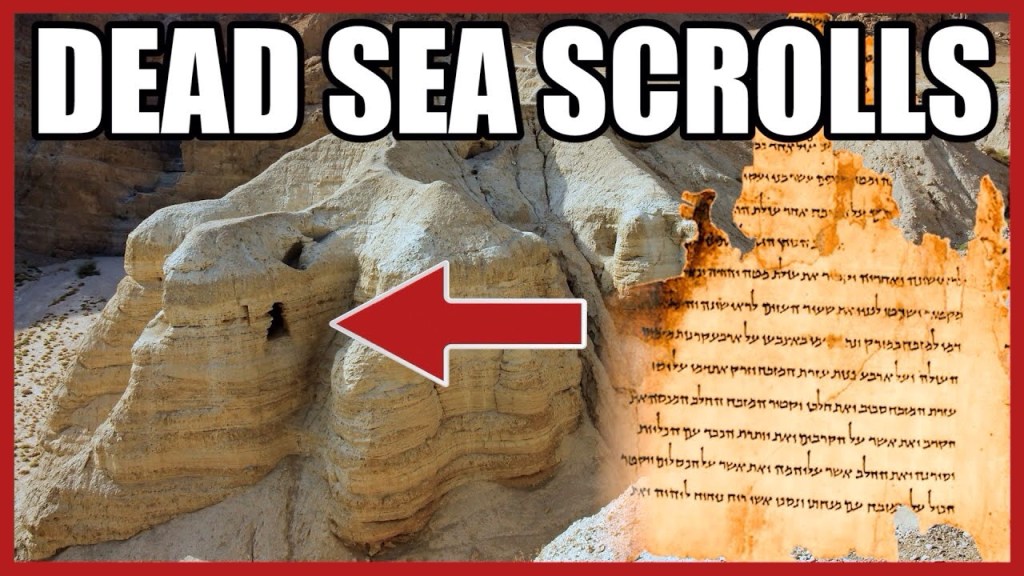
Who were the royal messiah, priestly messiah, and the prophetic messiah mentioned in the Dead Sea Scrolls? Who was the owner of the Dead Sea Scrolls?
The Dead Sea Scrolls, discovered in the mid-20th century, provide significant insights into the messianic expectations of the Qumran community, a Jewish sect that existed around the time of the Second Temple period. These scrolls mention several messianic figures, each with distinct roles:
1. Royal Messiah: Often referred to as the “Messiah of Israel” or “Messiah ben David,” this figure is expected to be a kingly leader descending from the line of David. This messiah would fulfill the role of a political and military leader, restoring the kingdom of Israel and establishing justice and peace.
2. Priestly Messiah: Known as the “Messiah of Aaron” or “Messiah ben Aaron,” this figure is envisioned as a religious leader, specifically a high priest from the line of Aaron. The priestly messiah is associated with restoring proper worship and religious practices, emphasizing the spiritual and ritual aspects of leadership.
3. Prophetic Messiah: The scrolls also allude to a prophetic figure akin to Moses, who would act as a teacher and guide. This messianic role aligns with the prophecy in Deuteronomy 18:18-19, which speaks of a prophet like Moses who would arise among the people.
Regarding the ownership of the Dead Sea Scrolls, the scrolls were first discovered by Bedouin shepherds in 1947 in caves near the site of Qumran, on the northwestern shore of the Dead Sea. The scrolls are believed to have been owned by the Essenes, a Jewish sect that lived in the area during the Second Temple period.
However, the ownership of the scrolls has been a matter of international dispute. Both Israel and Jordan have laid claims to the scrolls. Israel currently holds the scrolls, having acquired them during the Six-Day War in 1967 when it took control of East Jerusalem, where the scrolls were housed in a museum managed by Jordan.
 ABRAHAMIC THEOLOGY