
Azahari Hassim
What covenant does God establish with the Children of Adam in Surah 7, verse 173 of the Quran?
In Surah 7, verse 172 of the Quran, God establishes a covenant with the Children of Adam by bringing forth their descendants from their loins and making them testify against themselves. They are asked,
“Am I not your Lord?” to which they respond, “Yes, we have testified.”
This is done so that they cannot claim on the Day of Resurrection that they were unaware of this covenant. This verse is often interpreted as referring to the innate recognition of God and His lordship over humanity, which is considered a fundamental aspect of faith in Islam. It serves as a reminder of the accountability of human beings to their Creator and their inherent knowledge of His existence and sovereignty.
What is the consequence in the afterlife, as outlined in the Quran, for those who deny Islam and the prophethood of Muhammad?
In Islam, the Quran states that those who deny Islam and the prophethood of Muhammad will face consequences in the afterlife. These consequences are described as facing punishment in Hell for eternity. The Quran emphasizes the importance of belief in the teachings of Islam and the prophethood of Muhammad as a key aspect of faith. It is believed that those who reject these teachings will not receive mercy from God and will be held accountable for their disbelief.
Romans 1:19-20 ESV
[19] For what can be known about God is plain to them, because God has shown it to them.[20] For his invisible attributes, namely, his eternal power and divine nature, have been clearly perceived, ever since the creation of the world, in the things that have been made. So they are without excuse.

Does secularism embody the modern world?
Yes, secularism is often seen as embodying the modern world. Secularism is the principle of separating religious and governmental institutions and advocating for a society where individuals have the freedom to practice any religion or no religion at all. It emerged as a response to the religious conflicts and dominance of religious authority in the past. In the modern world, secularism is considered a key element of liberal democracies and is enshrined in the constitutions and legal systems of many countries. It promotes equality, freedom of belief, and the separation of church and state, which are seen as integral to modern notions of individual rights and freedoms.
Religions in the Postmodern Era: Exploring the Challenge to Independence and Authority
Are all religions in the postmodern era colonized and devoid of independence? Each religion cannot exert its authority to its full extent. How is this argument explained?
The argument that all religions in the postmodern era are colonized and lack independence is a complex one. It suggests that religions today cannot fully exert their authority due to various factors. This perspective can be explained through several lenses:
- Secularization: The theory of secularization posits that as societies become more modern, the influence of religion diminishes. In a postmodern context, this could mean that traditional religious authority is weakened as societies prioritize secular values.
- Pluralism: Postmodern societies are often characterized by a diversity of beliefs and worldviews. This pluralism can lead to a situation where no single religion can claim absolute authority, as there are many competing narratives.
- Individualism: There’s a trend towards individualized spirituality, where people craft their own belief systems rather than adhering strictly to organized religion. This shift can reduce the centralized authority of religious institutions.
- Globalization: The interconnectedness of the world through globalization means that religions are influenced by a variety of cultures and ideas, which can dilute their traditional authority and independence.
- Critique of Metanarratives: Postmodernism is skeptical of grand narratives or universal truths, which includes religious doctrines. This skepticism challenges the authority that religions have traditionally held.
It’s important to note that these are broad trends and interpretations, and the reality is more nuanced. Some religions may experience a resurgence or adapt to maintain their relevance and authority in different ways.
The postmodern era has indeed changed the landscape for religions, but it hasn’t rendered them completely devoid of independence or authority. Each religion’s response to the challenges of postmodernism is unique and can’t be generalized.
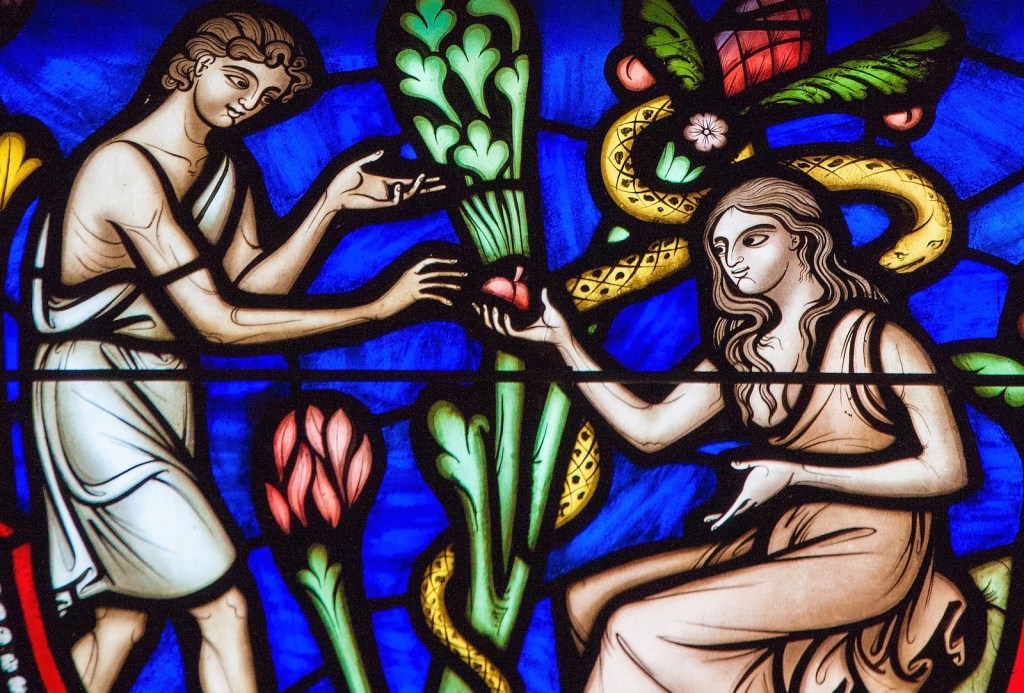
What is the status of Adam in Judaism?
In Judaism, Adam holds a foundational and significant status as the first human being created by God. Here are the key points regarding Adam’s status and role in Jewish tradition:
- Creation and Role:
- First Human: According to the Book of Genesis, Adam is the first man created by God. His creation is described in Genesis 2:7, where God forms him from the dust of the ground and breathes into his nostrils the breath of life.
- Partner of Eve: Adam is created along with Eve, the first woman, who is made from one of Adam’s ribs to be his companion (Genesis 2:21-22). Together, they represent the archetypal human couple.
- Garden of Eden:
- Inhabitants of Eden: Adam and Eve live in the Garden of Eden, a paradise where they are given the task to tend and care for the garden (Genesis 2:15).
- The Fall: The story of Adam and Eve’s disobedience in eating from the Tree of Knowledge of Good and Evil, against God’s command, leads to their expulsion from Eden (Genesis 3). This act introduces the concept of original sin and human mortality in Jewish thought.
- Theological Significance:
- Image of God: Adam is created “in the image of God” (Genesis 1:27), which implies a special status and inherent dignity in humanity. This concept underlines the belief in the sanctity and worth of every human life.
- Moral Responsibility: Adam’s role and actions emphasize human free will and moral responsibility. His choices and their consequences serve as foundational lessons about obedience, sin, and repentance.
- Legacy and Lineage:
- Progenitor of Humanity: Adam is considered the ancestor of all human beings. The genealogies in the Bible trace humanity back to Adam, establishing a direct connection to the divine creation.
- Symbolic Role: In Jewish thought, Adam symbolizes humanity itself, representing the human condition, potential, and the relationship between God and mankind.
- Interpretations and Teachings:
- Rabbinic Literature: The Talmud and Midrash expand on the Biblical narrative, offering deeper insights and moral lessons from Adam’s life and actions. For example, discussions about Adam’s repentance and the concept of tshuva (returning to God) are explored in these texts.
- Kabbalistic Views: In Kabbalah, Adam is sometimes seen as Adam Kadmon, a primordial, spiritual being, representing the cosmic and mystical aspects of creation.
Overall, Adam is a central figure in Jewish tradition, symbolizing the beginning of humanity, the human relationship with God, and the ethical and moral responsibilities bestowed upon mankind.
 ABRAHAMIC THEOLOGY