Azahari Hassim
What was the description of Allah according to the Arabs prior to the emergence of Islam?
Prior to the emergence of Islam, Arabian beliefs were primarily polytheistic, involving the worship of many gods and goddesses. Allah was recognized among these deities and was considered the Supreme God or the God of gods, often linked to creation, the heavens, and high virtues such as mercy and compassion.
Allah was known to them according to the impression from the Holy Quran, (in Surah 29, verse 61 and Surah 31, verse 25) where it is indicated that even in pre-Islamic times, if the polytheists were asked who created the heavens and the earth, they would have surely said, “Allah.”
However, their understanding and worship of Allah were not monotheistic as in Islam. They worshipped other gods alongside Allah and embraced a number of ritualistic practices.
Interestingly, the word Allah itself means “the One True God” in Arabic, and it was used by both Jewish and Christian Arabs to refer to the monotheistic deity. So, even before Islam, the concept of Allah existed, albeit in different contexts and beliefs.
In conclusion, prior to the emergence of Islam, Arabs recognized Allah but did not single him out exclusively for worship.
Was the term “Allah” used by Christian Arabs to refer to God prior to the rise of Islam in the Arabian Peninsula?
The term “Allah” was indeed used by Christian Arabs to refer to God prior to the rise of Islam in the Arabian Peninsula. The word “Allah” is derived from the Arabic words “al-ilah,” which means “the God.” It was a common term used by Arab Christians, Jews, and pagans alike to refer to their respective deities before the advent of Islam.
Christian Arabs who spoke Arabic as their native language would use the term “Allah” in their religious texts, prayers, and everyday conversations when referring to God. This practice predates Islam and continued even after the spread of Islam in the region.
The use of the term “Allah” by Christian Arabs highlights the linguistic and cultural continuity between pre-Islamic Arabia and early Islamic societies. It also demonstrates that monotheistic beliefs were present among various religious communities in the region long before Islam emerged as a major religion.
Edward William Lane
(British Orientalist and Lexicographer):
“Allah is the proper name of the deity, acknowledged by the ancient Arabs before the introduction of Christianity and Islam. It is a word that signifies the universal, singular nature of the divine being.”
Linguistic Connections: The Word for God in Jesus’ Aramaic and its Relation to Arabic ‘Allah
How the word “God” is pronounced in the language of Jesus?
The language spoken by Jesus and the people of his time was Aramaic. In Aramaic, the word for “God” is “Alaha” (ܐܒܐ). This is the term Jesus likely used when referring to God. It is important to note that Aramaic has different dialects, so the exact pronunciation might vary slightly depending on the specific dialect spoken in Jesus’ region.
What is the connection between “Allah” and the word of God in the Aramaic language in Jesus’ time?
In Jesus’ time, the common language spoken in the region was Aramaic. The word for God in Aramaic is “Alaha” or “Elaha” which is similar to the Arabic word “Allah.” Both words are derived from the Semitic root “il” which means God.
So, the word for God in the Aramaic language spoken during Jesus’ time, “Alaha,” is linguistically related to the word “Allah” in Arabic. This linguistic connection highlights the shared heritage and linguistic roots of the Semitic languages spoken in the region, including Aramaic and Arabic.
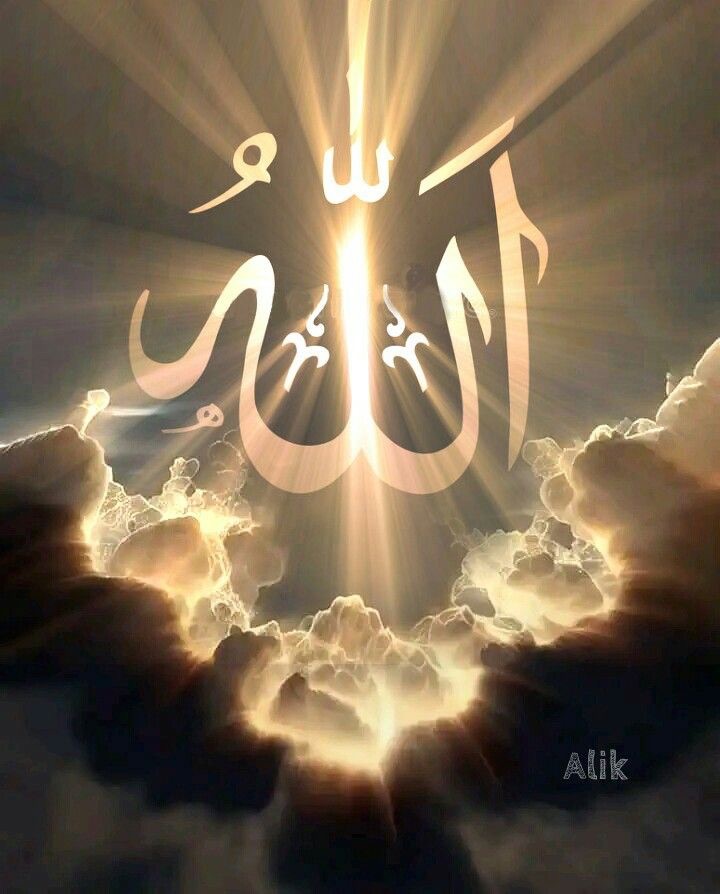
Allah
Arabic Allāh (“God”), the one and only God in Islam.
Etymologically, the name Allah is probably a contraction of the Arabic al-llah, “the God.” The name’s origin can be traced to the earliest Semitic writings in which the word for god was il, el, or eloah, the latter two used in the Hebrew Bible (Old Testament). Allah is the standard Arabic word for God and is used by Arabic-speaking Christians and Jews as well as by Muslims.
The association of the word specifically with Islam comes from the special status of Arabic as the language of Islam’s holy scripture, the Qur’an: since the Qur’ān in its original language is considered to be the literal word of God, it is believed that God described himself in the Arabic language as Allāh. The Arabic word thus holds special significance for
Muslims, regardless of their native tongue, because the Arabic word was spoken by God himself.
Allah is the pivot of the Muslim faith. The Qur’ān stresses above all Allah’s singularity and sole sovereignty, a doctrinal tenet indicated by the Arabic term tawḥīd (“oneness”). He never sleeps or tires, and, while transcendent, he perceives and reacts to everything in every place through the omnipresence of his divine knowledge. He creates ex nihilo and is in no need of a consort, nor does he have offspring.
Three themes preponderate in the Qur’ān: (1) Allah is the Creator, Judge, and Rewarder; (2) he is unique (wāḥid) and inherently one (aḥad); and (3) he is omnipotent and all-merciful. Allah is the “Lord of the Worlds,” the Most High; “nothing is like unto him,” and this in itself is to the believer a request to adore Allah as the Protector and to glorify his powers of compassion and forgiveness.
 ABRAHAMIC THEOLOGY