Azahari Hassim
There is a belief that Jesus was a messiah in the same sense as other messiahs before him. Scripturally, Jesus was not the apocalyptic messiah who was predicted by the Hebrew prophets to establish God’s kingdom in the Holy Land. Could you kindly provide an explanation for the meaning of the preceding statement?
The belief that Jesus was a messiah in the same sense as other messiahs before him refers to the idea that he was seen as a savior figure who would bring about spiritual redemption and salvation. In this context, messiah is understood as a leader or deliverer chosen by God to fulfill a specific role in the divine plan.
However, scripturally speaking, Jesus was not the apocalyptic messiah that many Jews were expecting based on the prophecies found in Hebrew scriptures. The traditional Jewish understanding of the apocalyptic messiah was of a powerful political and military leader who would liberate Israel from its enemies, establish God’s kingdom on earth in the Holy Land, and rebuild the Holy Temple in Jerusalem.
Jesus’ teachings and actions did not align with these expectations of a conquering warrior king. Instead, he preached about love, forgiveness, and spiritual transformation. He emphasized inner righteousness over outward displays of power. This led many Jews to reject Jesus as their expected messiah, that is, the apocalyptic messiah.
In Christian theology, Jesus is believed to be the fulfillment of Old Testament prophecies in a different way than what was traditionally expected. Christians see Jesus as the ultimate savior who brings salvation through his sacrificial death and resurrection, rather than through political conquest.
So, when it is said that Jesus was not the apocalyptic messiah predicted by Hebrew prophets to establish God’s kingdom in the Holy Land, it means that his role and mission were different from what many people at that time were anticipating based on their interpretation of scripture.
Scholar John Bright:
In his work “A History of Israel,” John Bright discusses how Cyrus is uniquely positioned as a foreign messiah in biblical history.
“In the decree of Cyrus, we witness a unique instance where a foreign ruler is seen as the instrument of God’s plan, fulfilling the role of a messiah in delivering Israel from exile and allowing the rebuilding of the Temple.”
Who in the Old Testament is anointed with sacred oil to be God’s Messiah?
Numerous figures in the Old Testament were consecrated with holy oil to symbolize their appointment as holy messengers, commonly known as messiahs (anointed ones). Among them were:
- Kings: The most prominent examples are the kings of Israel and Judah. For instance:
Saul: Anointed by the prophet Samuel to be the first king of Israel (1 Samuel 10, verse 1).
David: Also anointed by Samuel to succeed Saul as king (1 Samuel 16, verse 13).
Solomon: Anointed by the priest Zadok and the prophet Nathan to succeed David (1 Kings 1, verse 39). - Priests: The high priests and their successors were also anointed with sacred oil, signifying their holy office. For example:
Aaron: Anointed by Moses to serve as the first high priest (Leviticus 8, verse 12). - Prophets: Occasionally, prophets were anointed to signify their special role and mission. For example:
Elisha: Anointed by Elijah to be his successor as a prophet (1 Kings 19, verse 16).
In the Old Testament, the act of anointing priests, kings, and prophets with holy oil was a crucial ceremony that identified them as “messiahs” or “anointed ones” in their specific positions.
The term “Messiah” is not restricted to one person but refers to different individuals who are anointed for specific purposes as directed by God.
Jesus, Muhammad, and the Davidic Messiah
In Matthew 22, verse 45, Jesus posed a question to the Pharisees. How can the Messiah be considered David’s descendant if David himself refers to him as ‘Lord’?
The following is an excerpt from Willmington’s Bible Handbook notes on Matthew 22, verses 42 to 45:
Jesus now asked a question of the Pharisees: They accepted Psalm 110 as a prediction of the Messiah, yet they considered that he would be a merely human descendant of David. If that were the case, asked Jesus, why did David refer to him as “Lord”? Both the deity and humanity of the Messiah are taught clearly in the Old Testament but the leaders could not see it. Jesus had finally silenced his critics once and for all.
Some Islamic scholars believe that, although Jesus was considered a messiah, he never publicly claimed to be the Davidic messiah whom the Jews were expecting. Moreover, it appears that in Matthew 22, verses 42 to 45, Jesus did not emphasize his divinity as most Christian commentators claim, but rather rejected the notion that the Messiah would be a descendant of David.
Islamic scholars argue that Jesus did not refer to himself but to someone other than him, that is Prophet Muhammad who was seated at the right hand of God. Similarly, while Jesus understood himself to be a prophet, he never publicly claimed to be the prophet mentioned in Deuteronomy 18, verse 18. How is this argument explained?
Islamic scholars present a nuanced interpretation of Jesus’ role as the Messiah and his relationship to the prophecies in the Hebrew Bible and the New Testament. Their arguments often center around specific biblical passages and the broader theological context within Islam.
Jesus as the Messiah and the Davidic Lineage
In Islam, Jesus (Isa) is recognized as the Messiah (Al-Masih), but this title does not carry the same connotations as it does in Christian theology. The Quran refers to Jesus as the Messiah eleven times, emphasizing his role as a prophet and messenger of God rather than a divine figure or a political savior from the line of David. This interpretation aligns with the Islamic view that Jesus did not claim divinity or a unique messianic kingship in the way that some Jewish and Christian traditions suggest.
Interpretation of Matthew 22, verses 42 to 45
In Matthew 22, verses 42 to 45, Jesus questions the Pharisees about the Messiah’s lineage, asking why David calls the Messiah “Lord” if the Messiah is his son. Some Islamic scholars have interpreted this passage as indicating that Jesus was referring to someone other than himself. Jesus was distancing himself from the traditional Jewish expectation of a Davidic Messiah. They contend that Jesus denied the future Messiah’s lineage from David and instead highlighted an inconsistent interpretation of messianic prophecy by the scribes.
Jesus and Prophet Muhammad
Some Islamic scholars extend this interpretation to suggest that Jesus was alluding to another figure who would fulfill the messianic expectations more completely. They propose that this messianic figure is Prophet Muhammad, who is considered the Seal of the Prophets in Islam and is believed to have brought the final and complete revelation from God. This perspective is supported by the belief that Jesus foretold the coming of Muhammad, aligning with the Islamic view that all prophets, including Jesus, pointed towards the final messenger.
Jesus and Deuteronomy 18, verse 18
Regarding Deuteronomy 18, verse 18, which speaks of a prophet like Moses, Islamic scholars argue that Jesus did not publicly claim to be this prophet. Instead, they believe that this prophecy refers to Muhammad, who, like Moses, brought a comprehensive law and led a community of believers. This interpretation is consistent with the Islamic view that Muhammad fulfills the role of the final prophet, bringing the last and complete message from God.
Conclusion
Islamic scholars argue that Jesus, although being a messiah like other messiahs before him, did not claim to be the Davidic Messiah in the traditional Jewish sense and that he did not see himself as the prophet mentioned in Deuteronomy 18, verse 18. Instead, they believe that these roles were fulfilled by Prophet Muhammad. This interpretation is rooted in a broader theological framework that sees Jesus as a significant prophet and messenger who foretold the coming of Muhammad, the final prophet.
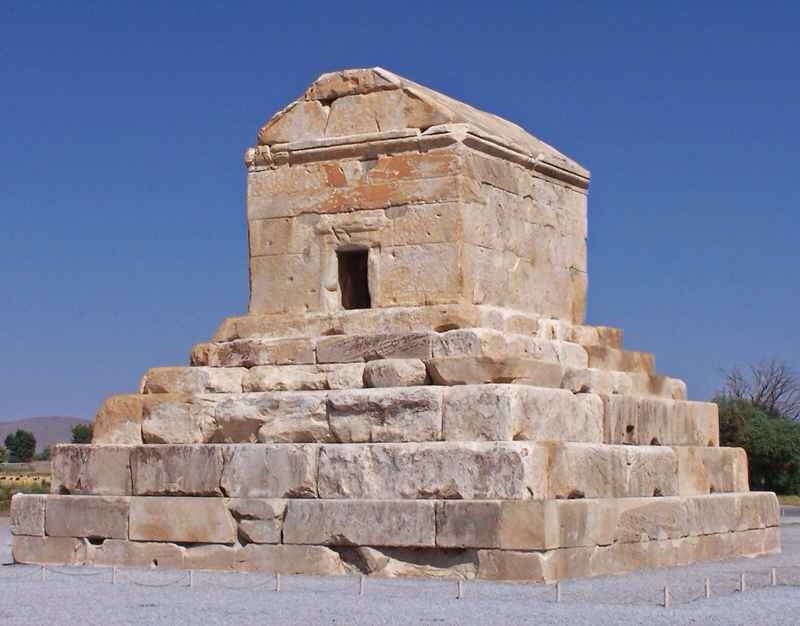
Cyrus is praised in the Book of Isaiah (Isaiah 45:1) as a “Messiah” or “anointed one” chosen by God to restore the Israelites to their homeland and rebuild the Temple in Jerusalem. In the Book of Ezra, Cyrus’s decree allows the Jews to return to Jerusalem, highlighting his role as a liberator and a proponent of religious tolerance.
The Hebrew Bible
CYRUS
Cyrus II, better known as Cyrus the Great, was the founder and first ruler of the Persian Empire (559–529 BC). After Cyrus assumed leadership of the Persians, he defeated the Medes (c. 550 BC) and combined the two states into one. He then defeated the Lydians (c. 546 BC), located in Asia Minor with a capital at Sardis, ruled at that time by the legendary King Croesus.
Cyrus then turned his attention to the major prize, Babylon, whose kingdom extended from Palestine into Syria and across Mesopotamia. In 539 BC he defeated the army of Babylon under the leadership of its king, Nabonidus, then soon entered the city, which, according to Dan. 5, was ruled by Nabonidus’s son and coregent, Belshazzar.
After inheriting the Babylonian empire and all its vassals, Cyrus issued a decree that allowed these subjugated people to return to their lands and rebuild their temples. This decree is described in what has come to be known as the Cyrus Cylinder, a record of major events in Cyrus’s reign, but in the Bible the version is specifically directed toward the Jewish people (2 Chron. 36:23; Ezra 1:2–4). Soon thereafter, some, but not all, Jewish exiles began to return to Jerusalem under the leadership of Sheshbazzar and Zerubbabel.
Cyrus’s impact on the people of God is described in Isa. 44:28–45:13 (esp. 45:1), where God refers to this foreign king as “his anointed” or “his messiah” (mashiakh). Such an honorific shows that it was really God himself who moved history to restore his people to their land. Cyrus died in 530 BC while fighting the Massagetae in central Asia. His son Cambyses II inherited his vast empire from him at that time.

 ABRAHAMIC THEOLOGY