Azahari Hassim
Some believe that the “seed” mentioned in Genesis 22, verse 18, is not Jesus because of his statement in Matthew 15, verse 24. How is this argument articulated?
The argument concerning the “seed” mentioned in Genesis 22, verse 18, and Jesus’ statement in Matthew 15, verse 24, involves interpreting biblical texts and understanding the scope of Jesus’ mission according to the New Testament.
In Genesis 22, verse 17 to 18, God promises Abraham,
“I will surely bless you and make your descendants as numerous as the stars in the sky and as the sand on the seashore. Your descendants will take possession of the cities of their enemies, and through your offspring (seed) all nations on earth will be blessed, because you have obeyed me.”
This promise, particularly the part about “through your offspring all nations on earth will be blessed,” is seen by Christians as a messianic prophecy referring to Jesus Christ. The argument that it refers to Jesus is supported by passages in the New Testament, such as Galatians 3, verse 16, where Paul explicitly identifies Christ as the “seed” to whom the promise was made.
However, some argue that the “seed” mentioned in Genesis cannot be Jesus based on His statement in Matthew 15, verse 24. In this passage, Jesus says,
“I was sent only to the lost sheep of Israel.”
This statement is made in the context of Jesus initially refusing to help a Canaanite woman who asks Him to heal her demon-possessed daughter. Jesus’ declaration of being sent only to the lost sheep of Israel is interpreted by some as evidence that His mission was exclusively to the Jewish people, not to all nations.
Thus, the argument against Jesus being the “seed” mentioned in Genesis 22, verse 18, is articulated by pointing out a perceived contradiction between the universal blessing promised to Abraham’s seed (implying a mission to all nations) and Jesus’ own words limiting His mission to the Israelites.
Critics of the view that Jesus is the fulfillment of the Genesis prophecy might argue that if Jesus Himself stated His mission was only to the Israelites, then He cannot be the “seed” through whom all nations on earth are blessed, as described in Genesis.
In summary, based on Jesus’ statement, some believe that Jesus saw his mission primarily as being directed towards the Jewish people and not necessarily towards all humanity. Therefore, they argue that it is unlikely for Jesus to be directly linked to the “seed” promised to Abraham in Genesis 22, verse 18.
Holy Quran 3:49
وَرَسُولًا إِلَىٰ بَنِىٓ إِسْرَٰٓ
And (make him, Jesus) an apostle to the children of Israel:
Genesis 22:18: Muhammad, the Hajj, and Differing Interpretations Across Abrahamic Faiths
Did Muhammad, through the Hajj ritual, fulfill the prophecy mentioned in Genesis 22, verse 18?
The verse you are referring to, Genesis 22, verse 18, reads: “And through your offspring all nations on earth will be blessed, because you have obeyed me.” This promise is made to Abraham after he demonstrates his willingness to sacrifice his son (Isaac, according to the Bible; Ishmael, according to Islamic tradition).
Many Jewish and Christian theologians interpret the “offspring” (or “seed”) mentioned in this verse as a reference to the line of descendants that would lead to the Jewish people, and by extension, to Jesus Christ in Christian theology. Through this lineage, blessings would be conferred to all nations.
In Islamic theology, however, the “offspring” or “seed” in Genesis 22, verse 18, is often interpreted as referring to Ishmael, the son who was nearly sacrificed according to Islamic tradition. Muslims believe that the Prophet Muhammad, as a direct descendant of Ishmael, fulfills this prophecy, as it is through him that all nations are blessed with the message of Islam.
The lineage of Prophet Muhammad through Ishmael is considered important in Islamic belief because the near-sacrifice event, believed to involve Ishmael instead of Isaac, is central to the Abrahamic covenant. Muslims believe that the final and complete message of God to humanity, Islam, came through this prophetic lineage.
The Hajj ritual, which commemorates events in the lives of Abraham, Hagar, and Ishmael, can be seen by Muslims as a testament to the fulfillment of this prophecy. Every year, followers of Islam globally gather in Mecca to take part in the Hajj pilgrimage, commemorating the tradition of Abraham’s near sacrifice of his son Ishmael.
It symbolizes the universality of the blessings promised to Abraham’s descendants. For many Muslims, this pilgrimage is a manifestation of the blessings through Ishmael’s lineage, culminating in Muhammad and the global reach of Islam.
However, this interpretation is not universally accepted, especially among Jewish and Christian theologians, who typically see the “offspring” or “seed” in Genesis 22, verse 18, as referring to Isaac’s line, ultimately leading to the people of Israel and, in Christian theology, to Jesus Christ. Interpretations of scripture are deeply influenced by religious, theological, and cultural perspectives.
In summary, while some Muslims assert that Muhammad, as a descendant of Ishmael, fulfills the prophecy in Genesis 22, verse 18, through the message of Islam and rituals like the Hajj, this interpretation is specific to Islamic theology. It reflects the belief that Ishmael, rather than Isaac, was the son nearly sacrificed and that Muhammad, as Ishmael’s descendant, brings blessings to all nations. This view is not shared by all Abrahamic faiths.
The right of Ishmael as being the firstborn of Abraham
Genesis 16, verse 3, is a verse from the Bible that describes a key event involving Abraham, Sarah, and Hagar. In this verse, Sarai (later known as Sarah), the wife of Abram (later known as Abraham), gives her Egyptian maidservant Hagar to Abraham as a wife to bear children, as Sarah had not been able to conceive. This action marks a significant moment in the narrative, as it leads to complex family dynamics and consequences in the story of Abraham and his descendants.
Genesis 16, verse 3, reads:
And Sarai Abram’s wife took Hagar her maid the Egyptian, after Abram had dwelt ten years in the land of Canaan, and gave her to her husband Abram to be his wife.
Deuteronomy 21, verses 15 to 17, is a passage from the Old Testament of the Bible that addresses the rights of a man concerning his sons, particularly in the context of inheritance. The verses outline conditions for a man who has two wives, one he loves and one he does not. The law states that when dividing his inheritance among his sons, he must not favor the son of the loved wife over the son of the unloved wife. Instead, he should acknowledge the firstborn son, regardless of the mother’s status. This passage emphasizes fairness and the importance of honoring the firstborn in matters of inheritance.
Deuteronomy 21, verses 15 to 17, reads:
If a man have two wives, one beloved, and another hated, and they have born him children, both the beloved and the hated; and if the firstborn son be hers that was hated:
Then it shall be, when he maketh his sons to inherit that which he hath, that he may not make the son of the beloved firstborn before the son of the hated, which is indeed the firstborn:
But he shall acknowledge the son of the hated for the firstborn, by giving him a double portion of all that he hath: for he is the beginning of his strength; the right of the firstborn is his.
The belief that the Abrahamic covenant was fulfilled through Ishmael rather than Isaac, including the promise of land from the Nile to the Euphrates and the blessing to all nations through Abraham’s seed, is held by some, particularly within Islamic tradition. Here’s a more detailed articulation of their argument:
Ishmael and the Covenant.
- Ishmael as the Firstborn: Supporters of this view argue that Ishmael, being Abraham’s firstborn son, was the original heir to the covenant. They emphasize that Ishmael was the first child of Abraham, born to Hagar, Sarah’s Egyptian maidservant.
- Sacrifice Narrative: They contend that the narrative of Abraham being asked to sacrifice his son originally referred to Ishmael, not Isaac. This is based on the belief that ancient scriptures were altered by Israelite scribes to emphasize Isaac’s role.
- Blessing and Land Promise: The promise of land from the Nile to the Euphrates and the blessing to all nations is seen as applying to Ishmael’s descendants. Islamic tradition views Ishmael as an ancestor of the Arab peoples, and thus sees the fulfillment of these promises through the Islamic Hajj and in the rise of Islamic civilization.
Scriptural Alteration Argument
- Scribal Changes: They argue that ancient Israelite scribes altered the scriptures to shift the focus from Ishmael to Isaac. This was done to establish a theological foundation for the Israelites’ claim to the land and their unique covenantal relationship with God.
- Evidence from Quranic Texts: The Quran refers to the story of Abraham and his son, implying that Ishmael was the one to be sacrificed. This, combined with historical accounts and interpretations, is used to argue for the primacy of Ishmael in the covenantal promises.
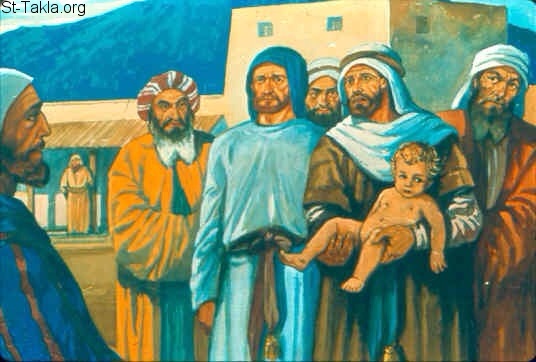
What was the rationale behind the prophet’s decision to present his firstborn instead of his other sons, as detailed in the Bible (Micah 6, verse 7)?
The verse reads:
“Shall I give my firstborn for my transgression, the fruit of my body for the sin of my soul?”.
The rationale behind the prophet’s decision to present his firstborn instead of his other sons in Micah 6, verse 7 is likely based on the cultural and religious significance of the firstborn in ancient Israelite society.
In many ancient cultures, including Israelite culture, the firstborn held a special status and had certain privileges and responsibilities. This included being the primary heir to the family’s inheritance and having a special connection to the divine.
By offering his firstborn, the prophet may have been trying to convey the seriousness and gravity of the situation. This action would have been a powerful symbol of sacrifice and devotion, as the firstborn was typically seen as the most valuable and cherished among the children.
It could also be seen as a way of emphasizing the depth of the prophet’s regret and repentance for his transgressions, as offering one’s firstborn would have been an unimaginable and incredibly difficult act for any parent.
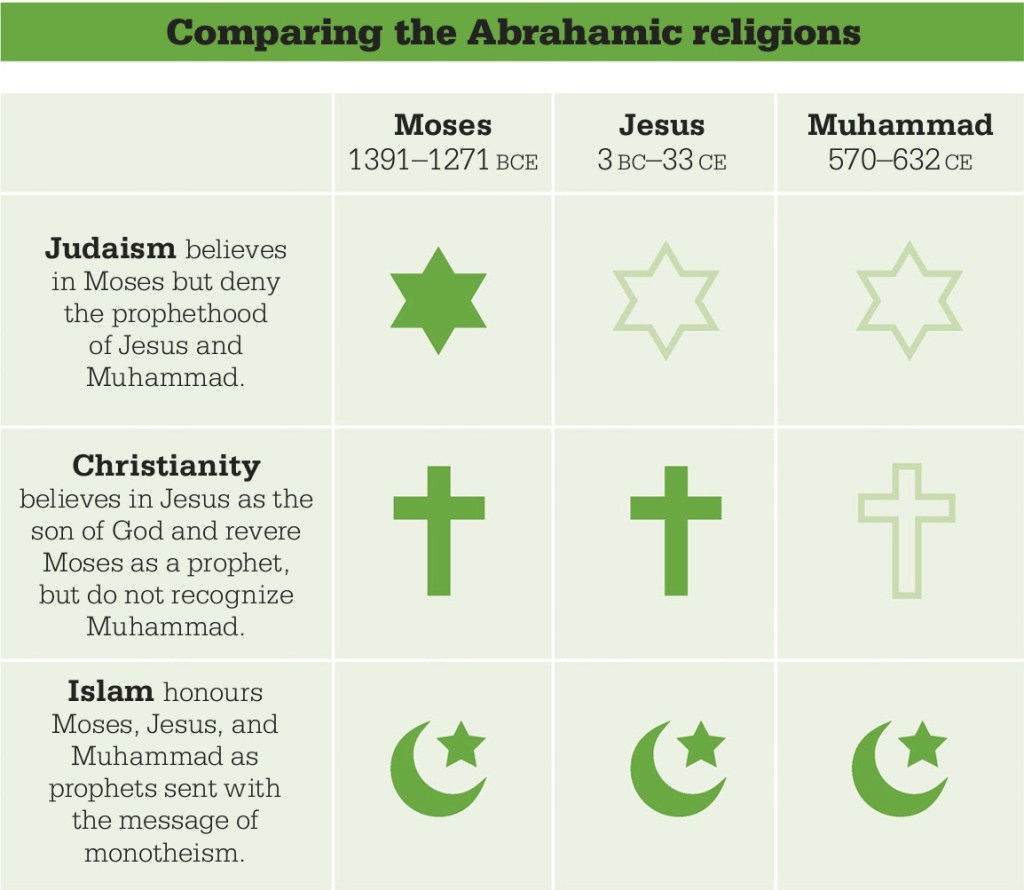
What is the position of Abraham within the Islamic faith?
In Islam, Abraham (known as Ibrahim in Arabic) is a highly revered prophet and a key figure in the faith. He is considered one of the greatest prophets and is often referred to as a “Friend of God” (Khalilullah). His significance in Islam can be summarized in several key points:
1. Father of Monotheism: Abraham is regarded as the patriarch of monotheism. He is seen as a model of faith and submission to the one God (Allah), and his commitment to monotheism is emphasized in Islamic teachings.
2. Prophet and Messenger: Abraham is recognized as one of the major prophets who received divine revelation. He is mentioned numerous times in the Quran, which highlights his role in calling people to worship the one true God and reject polytheism.
3. Ancestral Figure: Abraham is considered a spiritual ancestor of many nations. He is acknowledged as the forefather of both the Israelites through his son Isaac (Ishaq) and the Ishmaelites through his son Ishmael (Ismail). Muslims trace their lineage back to Ishmael.
4. Hajj and Rituals: The annual pilgrimage to Mecca, known as Hajj, includes rituals that commemorate events in the life of Abraham and his family. For example, the act of standing in the plain of Arafat and the symbolic stoning of the devil at Mina are associated with Abraham’s rejection of evil.
5. Sacrifice: The festival of Eid al-Adha, or the Feast of Sacrifice, commemorates Abraham’s willingness to sacrifice his son Ishmael in obedience to God’s command and God’s provision of a ram as a substitute. This act is celebrated as a demonstration of faith and submission.
6. Example of Faith: Abraham’s unwavering faith, his trials, and his obedience to God serve as an inspirational example for Muslims. His life and actions are explored in various Islamic teachings, and he is often cited in discussions about faith and righteousness.
Overall, Abraham holds a central position in Islam as a prophet, a model of monotheistic faith, and an important figure in the historical and spiritual lineage of Muslims.
 ABRAHAMIC THEOLOGY