Azahari Hassim
Does Deuteronomy 18, verse 18, contain a messianic prophecy?
Deuteronomy 18, verse 18, is often discussed in the context of messianic prophecy. Some interpretations suggest that it could be seen as a messianic prophecy, as it talks about a prophet who will come in the future and speak on behalf of God.
However, others argue that this verse is specifically referring to a line of prophets to come after Moses, rather than a single messianic figure. Ultimately, the interpretation of whether or not it contains a messianic prophecy is subjective and varies among different religious traditions.
The verse says:
“I will raise them up a Prophet from among their brethren, like unto thee, and will put my words in his mouth; and he shall speak unto them all that I shall command him.”
The identity of the prophet mentioned in this verse is a point of debate among different religious traditions. Here’s a breakdown of the main interpretations:
- Christianity: Christians generally believe this prophet refers to Jesus Christ. They see Jesus fulfilling the characteristics mentioned in the passage, like speaking God’s words and performing miracles.
- Islam: Muslims believe the prophet refers to Muhammad, the founder of Islam. The phrase “and he shall speak unto them all that I shall command him” pertains to the Quran, the sacred text of Islam.
- Judaism: Traditionally, Orthodox Jews believe the prophet refers to Joshua, Moses’ successor, who led the Israelites into the Promised Land.
Certain Jewish individuals do not consider Deuteronomy 18, verse 18, to be a commonly accepted messianic prediction. Instead, it is understood as referring to a line of prophets that God would send to the Israelites to guide them, starting with Joshua and continuing through the history of the Jewish people with prophets like Samuel, Elijah, Isaiah, Jeremiah, and others.
Some Jewish interpretations might see it as referring to a specific future messianic figure who, like Moses, would be a leader, lawgiver, and prophet.
Thomas Carlyle:
“The lies (Western slander) which well-meaning zeal has heaped round this man (Muhammad) are disgraceful to ourselves only.”
The Prophethood of Muhammad and the Hebrew Prophets: Exploring Biblical and Theological Foundations
In Genesis, chapter 21 and verse 18, an important prophecy and interaction between God and Hagar regarding Ishmael is mentioned.
The verse states:
“Arise, lift up the lad and hold him with your hand, for I will make him a great nation.“
One hypothesis proposes that the prophethood of the Hebrew prophets is tied to the Torah given to Moses, whereas Muhammad’s prophethood is associated with the prophecy of Hagar which predates the Torah. How is this idea presented?
The hypothesis you mention explores the relationship and distinctions between the prophethood of the Hebrew prophets and that of Muhammad, focusing on their respective biblical and theological foundations. This idea can be presented and analyzed through various religious, historical, and scriptural perspectives:
The prophethood of the Hebrew prophets is often seen as being linked directly to the Torah, which according to Jewish tradition, was given to Moses by God on Mount Sinai. This link is crucial because it establishes a continuous line of prophetic authority and teaching that is rooted in the laws and ethical teachings of the Torah.
The prophets following Moses are considered to have the role of interpreting, enforcing, and expanding upon the Torah’s teachings.
In contrast, Muhammad’s prophethood is sometimes associated with the prophecy attributed to Hagar. Hagar, according to the Genesis account, was the servant of Abraham and Sarah, and mother of Ishmael, who is considered by Muslims to be an ancestor of Muhammad.
This association is used to argue that Muhammad’s prophetic lineage predates the Mosaic Torah and is linked instead to Abrahamic covenant through Ishmael.
This hypothesis suggests that there are distinct covenants in the Abrahamic religions that validate different prophetic traditions. The Hebrew prophets fall under the covenant of Moses and the Sinai revelation, while Muhammad is considered under the covenant given to Abraham and Ishmael (as Hagar’s son).
This distinction is important in Islamic theology which views Islam as a continuation and fulfillment of Abrahamic faith, independent of the Mosaic laws.
The idea also touches upon the nature of the revelations received by the prophets. The Torah is often viewed as a national revelation aimed at the Jewish people, containing civil, moral, and ceremonial laws specifically designed for them.
In contrast, Muhammad’s revelation (the Quran) is considered universal, intended for all humanity, and not tied to the specific legal and ritual practices of the Jews.
By associating Muhammad with a prophecy that predates the Torah, this hypothesis also underscores the notion that prophetic messages have been universal and ongoing throughout human history. This could be seen as an attempt to place Islam within a broader, inclusive prophetic tradition that transcends Jewish ethnic and religious boundaries.
Messianism
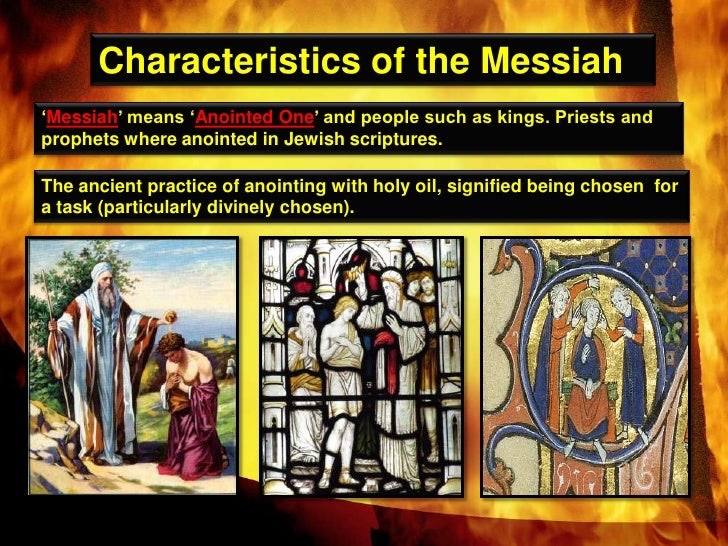
In the Hebrew Bible, “messiah” refers to persons serving in divinely ordained positions of authority, most often Israelite kings (e.g., 2 Sam. 23:1; Ps. 2:2) but also high priests (e.g., Lev. 4:3; Dan. 9:25) and, in one case, a foreign king (Isa. 45:1). Prophets were also anointed to office (1 Kings 19:16; Isa. 61:1) and could collectively be called “anointed ones” (Ps. 105:16). In early Jewish literature, the term “messiah,” though used infrequently, is applied to royal, priestly, and heavenly eschatological figures (e.g., Pss. Sol. 17:32; 1QS 9:10–11; 1 Enoch 48:10).
In light of this usage, scholars use the term “messiah” broadly to refer to any eschatological figure, whether royal, priestly, prophetic, or heavenly, who serves as an agent of God’s purposes in the world. Accordingly, messianism can be defined as the set of ideas associated with the identity and activity of divinely appointed eschatological agents of God’s judgment, salvation, or rule.
 ABRAHAMIC THEOLOGY