Azahari Hassim
How do some argue that the phrase “the night visions” in Daniel 7, verse 13 refers to Muhammad’s Night Journey to the seventh heaven to meet God instead of Jesus, whose ascension did not occur at night?
Some argue that the phrase “the night visions” in Daniel 7, verse 13, refers to Muhammad’s Night ( الإسراء والمعراج) rather than Jesus’ ascension based on the following points:
- The term “night visions” directly suggests an event that takes place at night. Muhammad’s Night Journey, which is said to have occurred during the night, aligns with this description. In contrast, Jesus’ ascension is generally not described as happening at night in Christian texts.
- According to Islamic tradition, during the Isra, Muhammad traveled from Mecca to Jerusalem and then ascended through the heavens in the Mi’raj. He is described as having profound spiritual experiences, meeting past prophets, and ultimately coming into the presence of God.
In Daniel 7, verses 13 to 14, “one like a son of man” is seen coming with the clouds of heaven and approaching the “Ancient of Days” (interpreted by scholars as God). This imagery of traveling through the heavens and meeting a divine figure has parallels with Muhammad’s Night Journey.
- The mention of the “clouds of heaven” could be metaphorically linked to the ethereal and divine nature of Muhammad’s ascent through the heavens, which is a central element in the Night Journey narrative.
- Some Muslim scholars see Daniel’s vision as prophetic, foretelling not just events relevant to Jewish history but also later significant religious events. They interpret the “one like a son of man” as a reference to a future prophet who would establish a new era, which Muhammad is believed to have done in Islam.
- In the vision, the figure receives authority, glory, and sovereign power, and all nations serve him. Supporters of this interpretation argue that Muhammad’s establishment of Islam fits this prophecy as he united tribes and established a widespread religious and political community.
While these arguments are compelling within an Islamic interpretive framework, this interpretation is not widely accepted in Christian and Jewish traditions.
However, it’s important to note that these interpretations are not mainstream and are often viewed within the context of interfaith dialogue or polemics.
Traditional Jewish and Christian interpretations generally identify the “one like a son of man” as a messianic figure, often associated with Jesus in Christian theology, while in Jewish thought, it can be seen as a representation of Israel or the Messiah.
John Esposito:
“The Night Journey is a central event in the life of Muhammad, the founding prophet of Islam. It marks the moment when Muhammad is spiritually exalted and shown the vastness of God’s universe.”
The Prophecy of Daniel: Constantine the Great and Muhammad the Prophet
Some believe that Daniel 7, verse 25 alludes to Constantine the Great, who presided over the council of Nicaea, while Daniel 7, verse 13, points to Muhammad’s Night Journey. How is this argument explained?
This is a very controversial argument that is not widely accepted by most biblical scholars and Christians, who believe that Daniel 7, verse 25, and Daniel 7, verse 13, refer to the Antichrist and the Messiah, respectively. However, some people who support this argument explain it in the following way:
They claim that Constantine the Great, who was the first Roman emperor to convert to Christianity and who convened the Council of Nicaea in 325 AD, was the little horn of Daniel 7, verse 25, who spoke pompous words against the Most High and tried to change the times and the laws.
They argue that Constantine corrupted the original teachings of Jesus and imposed his own doctrines and creeds on the Christian church, such as the doctrine of the Trinity, the observance of Sunday instead of Saturday as the Sabbath, and the celebration of Easter instead of Passover.
They also accuse Constantine of persecuting and oppressing those who did not conform to his version of Christianity, such as the followers of Arianism, who denied the divinity of Jesus.
Arianism sparked significant debates within the Church, particularly during the early Ecumenical Councils. The First Council of Nicaea in 325 AD condemned Arianism, affirming the doctrine of the Trinity and the full divinity of Christ. The Nicene Creed established the belief that the Son is “begotten, not made, of one substance with the Father.”
Islamic scholars claim that Muhammad, who was the prophet of Islam and who claimed to have a miraculous Night Journey from Mecca to Jerusalem and then to heaven in 621 AD, was the Son of Man of Daniel 7, verse 13, who came with the clouds of heaven and was given dominion, glory, and a kingdom by the Ancient of Days, that is God.
The term “night visions” directly suggests an event that takes place at night. Muhammad’s Night Journey, which is said to have occurred during the night, aligns with this description. In contrast, Jesus’ ascension is generally not described as happening at night in Christian texts.
They argue that Muhammad was a true prophet of God who restored the pure monotheism that was lost by Constantine and his followers. They also assert that Muhammad’s kingdom is an everlasting kingdom that will never be destroyed, and that all nations and peoples of every language will serve him or submit to his law.
In summary, these are a few points made by Islamic scholars to back the notion that Daniel 7, verse 25, and 7, verse 13, refer to Constantine as the little horn who established the Trinity at the Council of Nicea, and Muhammad as the Son of Man who encountered God on his Night Journey to the seventh heaven.
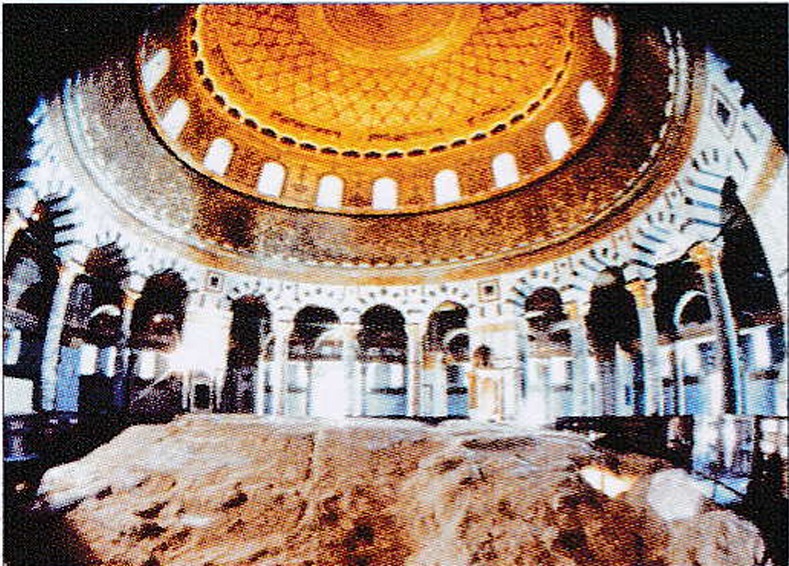
The Night Journey and Ascension to Heaven
Laylat al-Isra wal Miraj is Arabic for the night of the journey and ascension to heaven, an event that Muslims believe occurred on the 27th of Rajab, the seventh month of the Islamic calendar, in the tenth year of hijrah. It is said that having lost his wife Khadijah, and suffered in the town of Taif in the same year, Muhammad was consoled and strengthened in his mission by this timely miracle.
According to Islamic tradition, Muhammad spent the evening with his family and then went to visit the Kaabah, where he fell asleep in the hijr Ismail. He was woken by the Archangel Jibril, who led him to where a white winged beast named al-Buraq stood. He mounted the beast and they sped toward Madinah and Jerusalem. There, according to hadith, Muhammad led all the previous prophets in prayer at the site of the farthest mosque, al-Masjid al-Aqsa.
He was offered two cups of drink – wine and milk- but chose to drink the milk. Jibril approved of his choice, confirming that wine was prohibited. Finally, it is told, al-Buraq flew him up to heaven from the site of a rock, now the Dome of the Rock Mosque.
Muhammad met all the prophets again, but they were now in their heavenly forms. He went as far as the ‘lote tree of the uttermost end’, mentioned in the Quran (53:14), beyond which no one has ventured.
God’s divine light descended on the tree, and unlike Moses, Muhammad was able to gaze at it. Muslims believe that God instituted the five daily prayers here, first as 50, but finally reducing them to five. Muhammad claimed that he revealed only a part of what he and Allah discussed that night, and even that only over time.
While returning to Makkah, Muhammad saw trading caravans, which he later described to his companions. The caravans arrived just when he predicted, exhibiting all the details that he had described. Like the Night of Power, this night is marked by Muslims with devotion, prayers and shared meals.
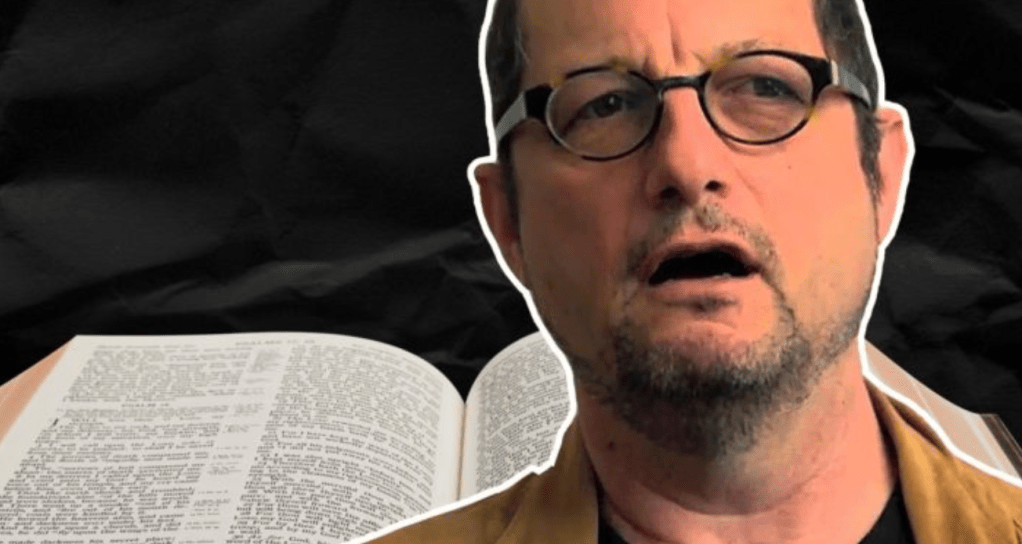
What is Bart Ehrman’s perspective on the term “son of man” as utilized by Jesus in the gospel?
Bart Ehrman, a prominent New Testament scholar, has a nuanced perspective on the term “Son of Man” as used by Jesus in the Gospels. His views can be summarized as follows:
1. Different Referents:
Ehrman argues that when Jesus used the term “Son of Man,” he was often referring to someone other than himself. Specifically, Ehrman believes that Jesus was speaking about a future cosmic judge who would come from heaven to judge the earth, a figure distinct from Jesus himself.
2. Apocalyptic Context:
Ehrman situates Jesus’ use of “Son of Man” within an apocalyptic framework. He suggests that Jesus anticipated the imminent arrival of God’s kingdom, where this “Son of Man” would play a critical role in the final judgment and the establishment of a utopian order.
3. Metaphorical and Literal Uses:
While some scholars argue that “Son of Man” could be a self-referential term used metaphorically by Jesus, Ehrman maintains that many instances in the Gospels indicate a literal expectation of a future divine figure. This figure, coming with divine authority, would execute judgment and bring about the end times.
4. Post-Resurrection Identification:
According to Ehrman, after Jesus’ resurrection, his disciples began to identify him as the “Son of Man” he had prophesied about. They believed that Jesus, having ascended to heaven, would return as this divine judge.
5. Scholarly Debate:
Ehrman’s view is not universally accepted. Many scholars believe that Jesus did refer to himself as the “Son of Man,” interpreting it as a self-designation. However, Ehrman’s interpretation is considered mainstream and is supported by his extensive work on the historical Jesus and early Christian writings.
Conclusion
Bart Ehrman’s perspective on the term “Son of Man” highlights a complex interplay between Jesus’ self-understanding and the apocalyptic expectations of his time. Ehrman posits that Jesus used the term to refer to a future divine judge rather than himself, a view that has sparked considerable scholarly debate. This interpretation underscores the diversity of early Christian thought and the evolving understanding of Jesus’ identity among his followers.
 ABRAHAMIC THEOLOGY