
Azahari Hassim
Hagar, an Egyptian woman with no power or status, is the first person in Scripture to be visited by an angel and the only person in Scripture to give God a name—El Roi, “the God who sees me.” In the midst of her pain and struggle, Hagar receives God’s blessing and promises.
It is believed that the prophecy of Hagar predated the Torah revealed to the Israelites. The Torah reiterated her prophecy, whose fulfillment is realized in the ritual Hajj of Islam. Some argue that the scribes of ancient Israelites attempted to tone down its importance. How is the argument articulated?
The argument as presented suggests that the prophecy of Hagar, which is believed to have predated the Torah, finds its fulfillment in the Islamic ritual of Hajj, and that the scribes of ancient Israel attempted to diminish its significance. Here’s how this argument is explained:
- Pre Torah origins: This argument posits that the prophecy of Hagar and her descendants, including Ishmael, existed prior to the revelation of the Torah to Moses. Supporters of this view often point to the genealogical and historical connections between Hagar and Ishmael and the founding of the Arab people.
- Prophecy reiterated in Torah: The claim is made that the Torah, when it was revealed to the Israelites, reiterated and acknowledged the prophecy related to Hagar and Ishmael. This acknowledgment can be found in the biblical narrative where Hagar and Ishmael’s story is mentioned.
- Importance of the Hajj ritual: Proponents then assert that the fulfillment of Hagar’s prophecy, as reiterated in the Torah, can be seen in the Islamic ritual of Hajj. They argue that Hajj, which is a pilgrimage to the Kaaba in Mecca, Saudi Arabia, is seen as a direct link to Hagar and Ishmael and represents the fulfillment of their destiny. This ritual is regarded as a significant practice in Islam and is central to the religious identity of Muslims.
- Suppression of Hagar’s significance: The argument continues by suggesting that the scribes of ancient Israel attempted to downplay the importance of Hagar and her descendants, including Ishmael, due to theological and political motivations. It is proposed that, in shaping the biblical narrative, these scribes might have marginalized or selectively emphasized certain aspects to elevate the prominence of Isaac and the Israelite lineage over Ishmael.
It’s important to note that this argument reflects a particular perspective and interpretation. There are different viewpoints on this topic, and scholars hold a wide array of opinions regarding the relationship between biblical narratives, biblical redaction, and the Islamic tradition.
Renita J. Weems (biblical scholar and author):
Hagar’s story is about an African slave woman who hears God, names God, and survives abuse. Her narrative invites us to consider the experiences of those who are often overlooked and undervalued.”
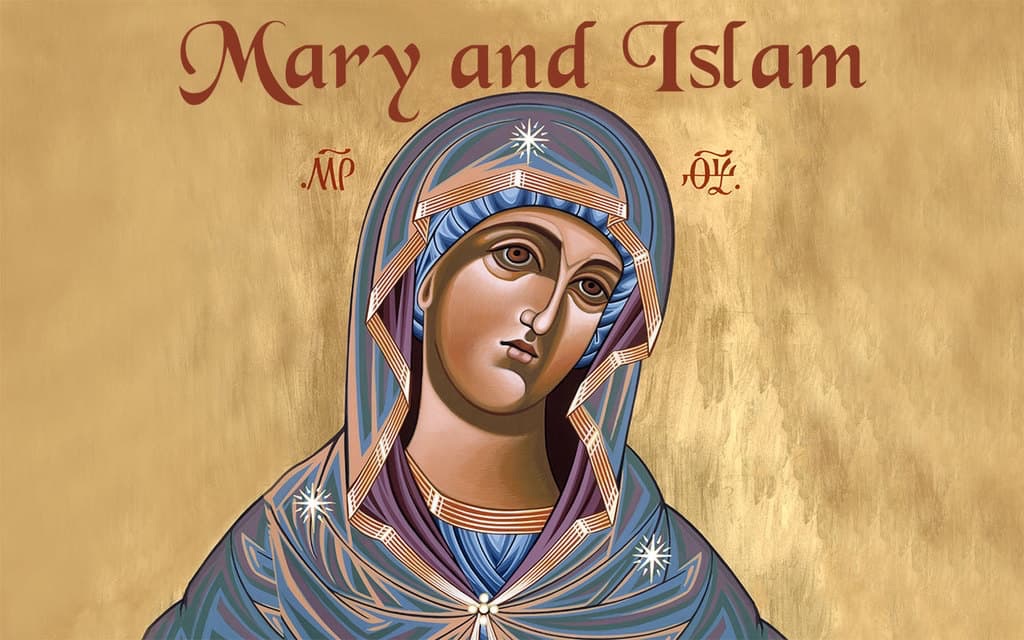
Mary and Hagar in Islam: Prominence and Reverence in Tradition and Ritual
In Islam, who is more prominent, Mary, the mother of Jesus, or Hagar, the mother of Ishmael?
In Islam, both Mary, the mother of Jesus, and Hagar, the mother of Ishmael, hold significant and respected positions, but their prominence is contextual and varies in different aspects of Islamic tradition.
- Mary in Islam: Mary is highly revered in Islam and is the only woman mentioned by name in the Quran. She has an entire chapter (Surah) named after her, that is Surah Maryam (Chapter 19). She is celebrated for her piety, chastity, and the miraculous birth of Jesus. Maryam is often cited as an example of virtue and is one of the most honored women in Islamic tradition.
- Hagar in Islam: Hagar is also a revered figure, especially for her role in the story of Prophet Abraham. Her search for water for her son Ishmael in the desert is commemorated by Muslims during the Hajj pilgrimage in the ritual of Sa’i, where pilgrims walk between the hills of Safa and Marwah. Hagar’s story symbolizes faith, perseverance, and trust in God’s providence.
The prominence of each figure can be contextually determined:
Religiously and Scripturally: Mary has a more detailed narrative in the Quran and is explicitly named, highlighting her unique status.
Culturally and Ritually: Hagar’s legacy is physically re-enacted by millions of Muslims annually during Hajj, giving her a prominent ritualistic role in Islamic practice.
Both figures, however, are deeply respected and are seen as exemplary models of faith and devotion in their own right. Their stories and the lessons derived from them are integral to Islamic teachings.
How is Hagar depicted in the Midrash literature?
In the Midrash, Hagar is described as a daughter of Pharaoh who becomes the handmaid of Sarah, Abraham’s wife. The story goes that when Pharaoh encountered the miracles God performed for Sarah to protect her from him, he gave his daughter Hagar to Sarah, hoping that by aligning his family with Abraham’s, he could also benefit from God’s protection.
The Midrashic account highlights Hagar’s royal origin to emphasize her significant status and the depth of her descent, from princess to servant, and later to the mother of Ishmael, emphasizing themes of divine providence and the interconnected fate of biblical characters.
Hagar in Islamic Tradition
In Islamic tradition, Hagar, known as Hajar in Arabic, holds a significant and revered position. Her story is prominently featured in various Hadith (sayings and actions of the Prophet Muhammad) and Islamic teachings. Here are some key aspects of what Hadith and Islamic tradition say about Hagar:
- Hagar and Ishmael in the Desert:
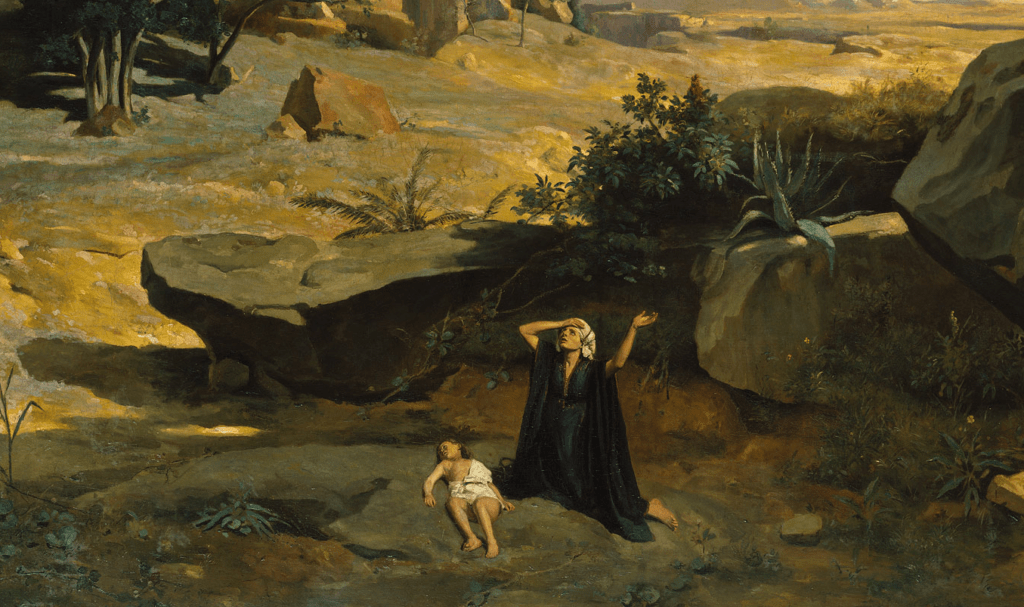
One of the most well-known stories involving Hagar is her journey to the desert with her infant son Ishmael. According to Hadith, Abraham was commanded by God to leave Hagar and her baby in the barren desert of Mecca. Hagar’s trust in God and her perseverance are highlighted in this story.
A significant Hadith from Sahih Bukhari describes Hagar running between the hills of Safa and Marwah in search of water for her infant son Ishmael. This event is commemorated in the Sa’i ritual, part of the Hajj pilgrimage, where pilgrims re-enact her search for water.
- The Well of Zamzam:
Islamic tradition holds that as Hagar searched desperately for water, the angel Jibril (Gabriel) struck the ground, and the well of Zamzam miraculously sprang forth. This well provided water for Hagar and Ishmael, and it remains a significant site in Islam to this day. This story is also recounted in Sahih Bukhari.
- Hagar’s Faith and Patience:
Hagar is often praised in Hadith and Islamic literature for her unwavering faith, patience, and devotion. Her story is used to exemplify trust in God’s plan and the importance of perseverance in the face of hardship.
- Role in Islamic Rituals:
As mentioned, the Sa’i ritual in Hajj, where pilgrims walk between Safa and Marwah, directly commemorates Hagar’s search for water. This act is a testament to her endurance and faith.
Example Hadith:
Sahih Bukhari 3364:
Narrated by Ibn Abbas: The first lady to use a girdle was the mother of Ishmael. She used a girdle so that she might hide her tracks from Sarah. Abraham brought her and her son Ishmael while she was suckling him, to a place near the Ka’ba under a tree on the spot of Zamzam, at the highest place in the mosque. During those days, there was nobody in Mecca, nor was there any water there. So he made them sit over there and placed near them a leather bag containing some dates, and a small water-skin containing some water, and set out homeward.
Hagar followed him, saying, “O Abraham! Where are you going, leaving us in this valley where there is no person whose company we may enjoy, nor is there anything (to enjoy)?” She repeated that to him many times, but he did not look back at her. Then she asked him, “Has Allah ordered you to do so?”
Abraham said, “Yes.” Hagar said, “Then Allah will not neglect us,” and returned while Abraham proceeded onwards, and on reaching Thaniya where they could not see him, Abraham faced the Ka’ba, and raising both hands, invoked Allah saying the following prayers: “O our Lord! I have made some of my offspring dwell in a valley without cultivation, by Your Sacred House (Ka’ba at Mecca) in order, O our Lord, that they may offer prayer perfectly. So fill some hearts among men with love towards them, and (O Allah) provide them with fruits so that they may give thanks.”
Conclusion:
Hagar’s story in Islamic tradition is one of profound faith, resilience, and trust in God’s providence. Her experiences are integral to several Islamic rituals and continue to inspire Muslims around the world.
 ABRAHAMIC THEOLOGY