Azahari Hassim
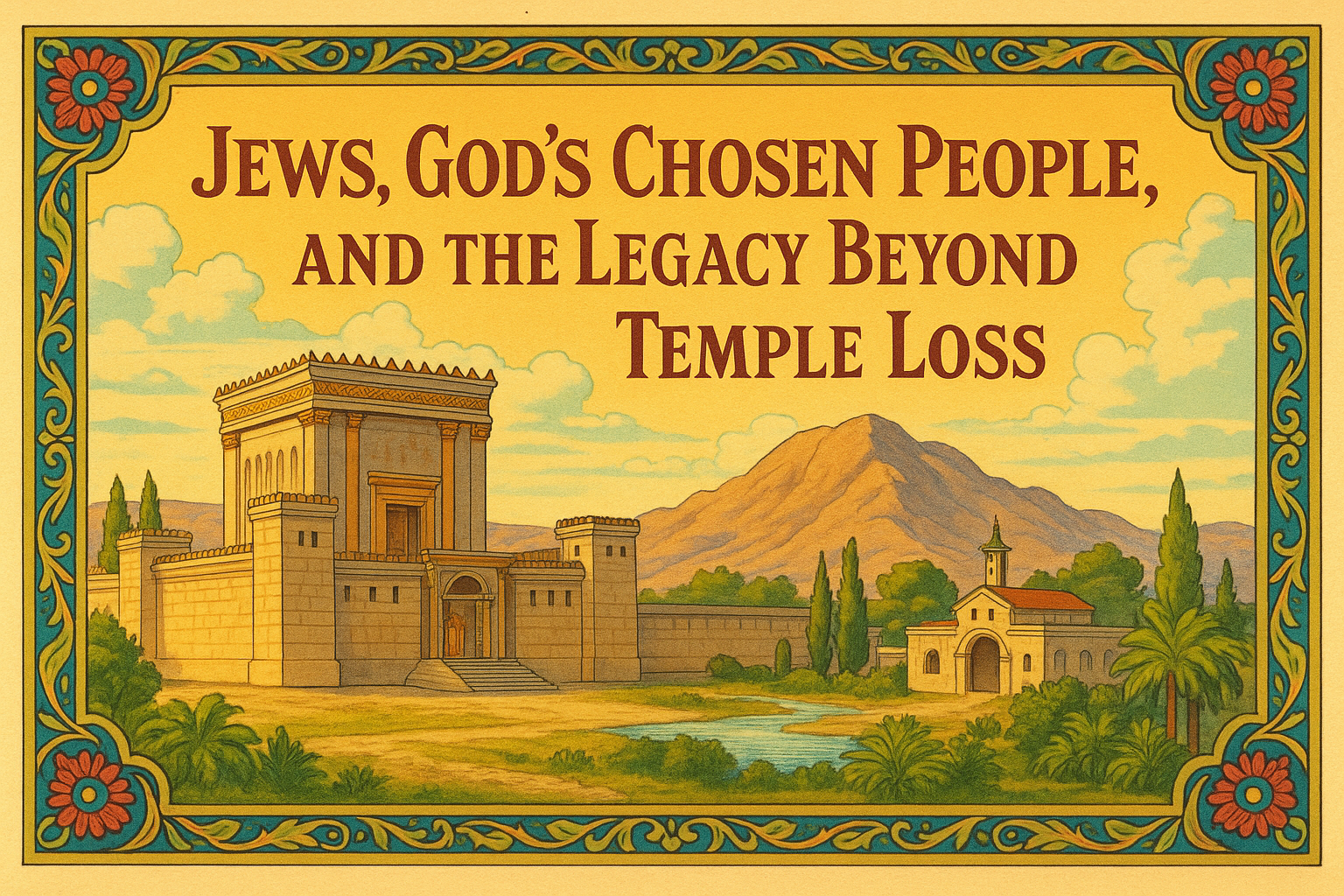
Do Jews today still believe that they are God’s chosen people, even after the loss of their two temples which could be seen as a sign of divine abandonment?
The belief that Jews are God’s chosen people is a fundamental aspect of Jewish faith and identity. This belief is based on the covenant between God and the Jewish people as described in the Hebrew Bible. The loss of the two temples in Jerusalem (the First Temple destroyed by the Babylonians in 586 BCE and the Second Temple destroyed by the Romans in 70 CE) has been interpreted by some as a sign of divine punishment or abandonment.
However, most Jews today still believe that they are God’s chosen people despite these historical events. They see the destruction of the temples as part of their history and theology, rather than evidence of being abandoned by God. Instead, many Jews view these events as opportunities for spiritual growth, renewal, and resilience.
Furthermore, Jewish tradition teaches that even in times of exile or suffering, God remains present with His chosen people. The concept of “chosenness” does not mean superiority over other peoples but rather a responsibility to uphold ethical values and contribute positively to the world.
In conclusion, while some may question how Jews can still believe they are God’s chosen people after losing their temples, for many Jews this belief remains central to their faith and identity despite historical challenges.
“Do not be grieved, my sons. There is another way of atoning for Israel’s sins which is no less efficacious. What is it? Acts of loving-kindness, as it is said, ‘For I desire mercy, not sacrifice.’”
Rabbi Yochanan ben Zakai
From a biblical perspective, can Judaism be characterized as the religion of sacrifice?
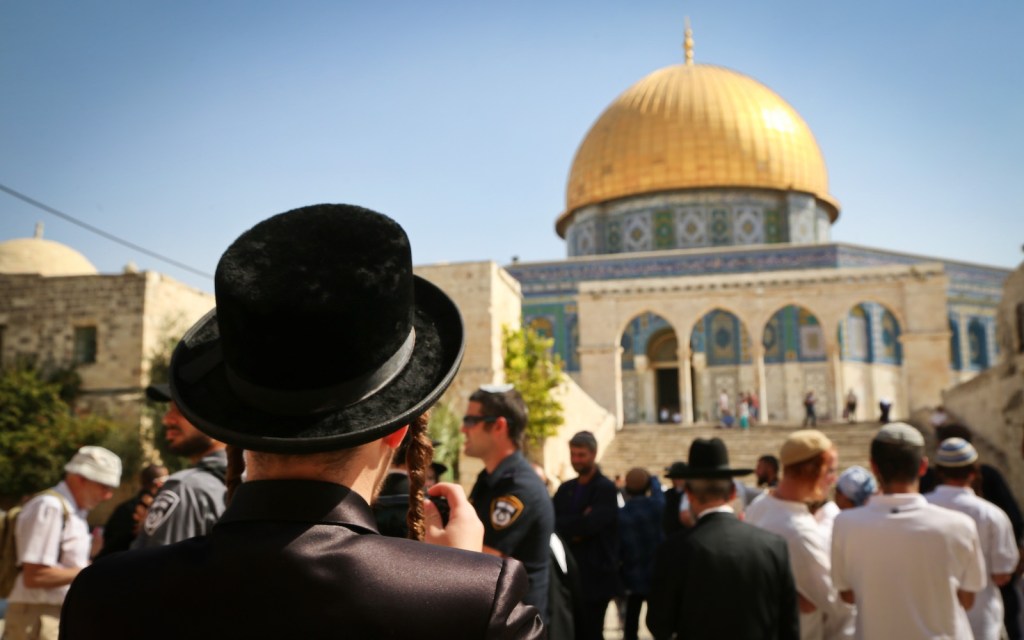
From a biblical perspective, Judaism can indeed be characterized as the religion of sacrifice. Sacrifice played a central role in the religious practice of ancient Israel as prescribed in the Hebrew Bible. In the book of Leviticus, detailed instructions are given for various types of sacrifices, including burnt offerings, grain offerings, sin offerings, guilt offerings, and peace offerings. These sacrifices were seen as a way for the Israelites to seek forgiveness for sins, express gratitude to God, and maintain a relationship with God.
The concept of sacrifice is deeply rooted in Jewish tradition and history, with the most significant sacrifices being those performed in the Temple in Jerusalem. However, after the destruction of the Temple in 70 CE, the practice of animal sacrifice ceased, and Judaism evolved to focus more on prayer, study of the Torah, and acts of loving-kindness as forms of worship.
While sacrifice continues to hold symbolic significance in Jewish liturgy and ritual, modern Judaism places greater emphasis on ethical behavior, personal repentance, and moral responsibility. Overall, Judaism can be characterized as a religion that has evolved over time, with sacrifice being an important aspect of its historical and theological foundation.
From an Islamic viewpoint, Muhammad’s Night Journey to Jerusalem symbolizes the end of Judaism as a sacrificial religion, as it is linked to the former Jewish temple.
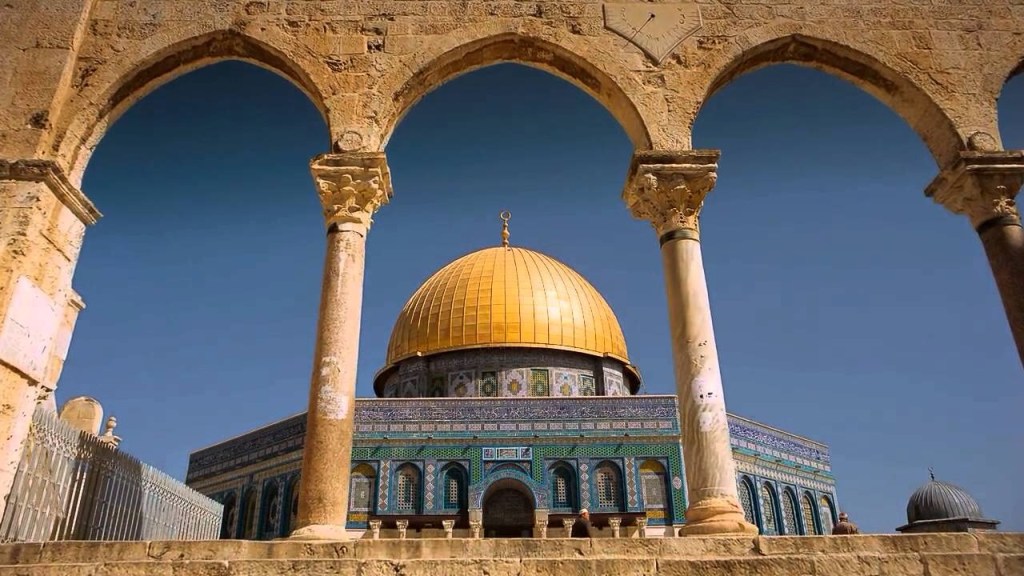
Muhammad’s Night Journey to Jerusalem, known as “Isra and Mi’raj”, holds significant religious and historical importance. This event is described in the Qur’an and Islamic traditions as a miraculous journey where Muhammad was transported from Mecca to Jerusalem, specifically to the Temple Mount, and then ascended to heaven. The journey is seen as a pivotal moment in Islamic history, reinforcing the connection between Islam and the earlier Abrahamic religions, particularly Judaism.
Theological Significance
The Night Journey is often interpreted as a symbol of the transition from Judaism to Islam, emphasizing the continuity and the eventual supersession of Islam over Judaism. The journey to Jerusalem, a city deeply sacred to Jews, and the subsequent ascension from the Temple Mount, underscores the shift in religious significance from the Jewish Temple to the Islamic holy sites. This transition is further highlighted by the construction of the Dome of the Rock and Al-Aqsa Mosque on the Temple Mount, which became central to Islamic worship and identity.
Historical Context
Historically, the Night Journey and the subsequent construction of Islamic monuments in Jerusalem were also politically motivated. The Umayyad dynasty, which ruled the Islamic empire after Muhammad’s death, sought to elevate Jerusalem’s status to compete with Mecca, which was controlled by a rival faction. By building the Dome of the Rock and Al-Aqsa Mosque, the Umayyads aimed to create a rival religious center that would attract pilgrims and bolster their political power.
Religious Practices
The Night Journey also influenced Islamic religious practices. Initially, Muslims prayed towards Jerusalem (Al-Aqsa Mosque) for a period of 16 or 17 months after migrating to Medina. Later, the direction of prayer (qibla) was changed to face the Kaaba in Mecca, following a revelation received by Muhammad. This change underscored the centrality of Mecca in Islam while maintaining Jerusalem’s importance as a sacred site.
Contemporary Significance
Today, the Temple Mount, known as Haram al-Sharif in Islam, remains a highly contested site, central to both Jewish and Islamic religious identities. The status quo agreement governing the site aims to maintain peace by restricting Jewish prayer and allowing Muslim worship. However, tensions often flare, with Palestinian terror groups using the site’s religious significance to incite violence against Israel.
Conclusion
In summary, from an Islamic perspective, Muhammad’s Night Journey to Jerusalem symbolizes the transition from Judaism to Islam, emphasizing the continuity and eventual supersession of Islam. The journey and the subsequent construction of Islamic monuments on the Temple Mount underscore the shift in religious significance from the Jewish Temple to Islamic holy sites, reflecting both theological and political motivations.
Jeremiah
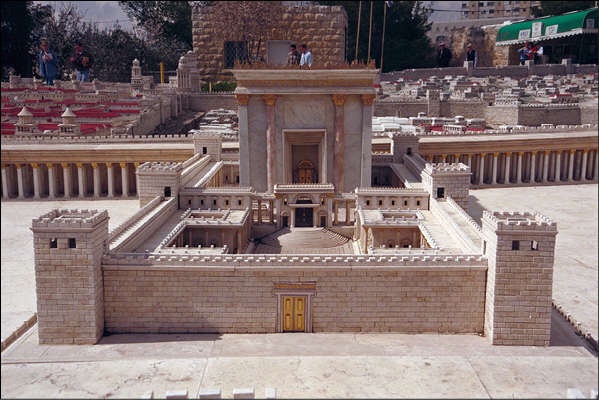
Prophet Jeremiah, known for his prophecies and lamentations around the time of the First Temple’s destruction in 586 BCE, expressed profound sorrow and warning regarding the fate of Jerusalem and its Temple. One of his most poignant expressions regarding the Temple is found in Jeremiah 7:4, where he critiques the false sense of security that people placed in the physical structure of the Temple:
“Do not trust in deceptive words and say, ‘This is the temple of the Lord, the temple of the Lord, the temple of the Lord!'”
This quote is part of a larger discourse in which Jeremiah warns the people of Judah and Jerusalem that relying on the mere presence of the Temple, while continuing to engage in unethical behaviors, would not save them from divine judgment. Jeremiah’s message emphasizes that genuine repentance and ethical living are more important than the external rituals performed in the Temple. This theme resonates throughout the Book of Jeremiah, where he repeatedly calls for sincere worship and social justice as the true means to please God, rather than mere ritualistic observance.
 ABRAHAMIC THEOLOGY