Azahari Hassim
What is the theological connection between the sacred land of Sham in Islam and the promised land referenced in the Torah, Genesis 15, verse 18?
The sacred land of Sham (often referred to as Greater Syria, encompassing modern-day Syria, Lebanon, Jordan, and Palestine) holds significant theological importance in Islam, and there are interesting connections to the promised land referenced in Genesis 15, verse 18, in the Torah and the Bible.
- Sacred Land in Islam:
Sham in Islamic Tradition: Sham is considered a blessed and sacred region in Islamic tradition. It is frequently mentioned in Hadith literature and is associated with numerous prophets, including Abraham, Moses, and Jesus. The Prophet Muhammad is reported to have said that blessings are found in Sham and that it will be a place of safety and faith.
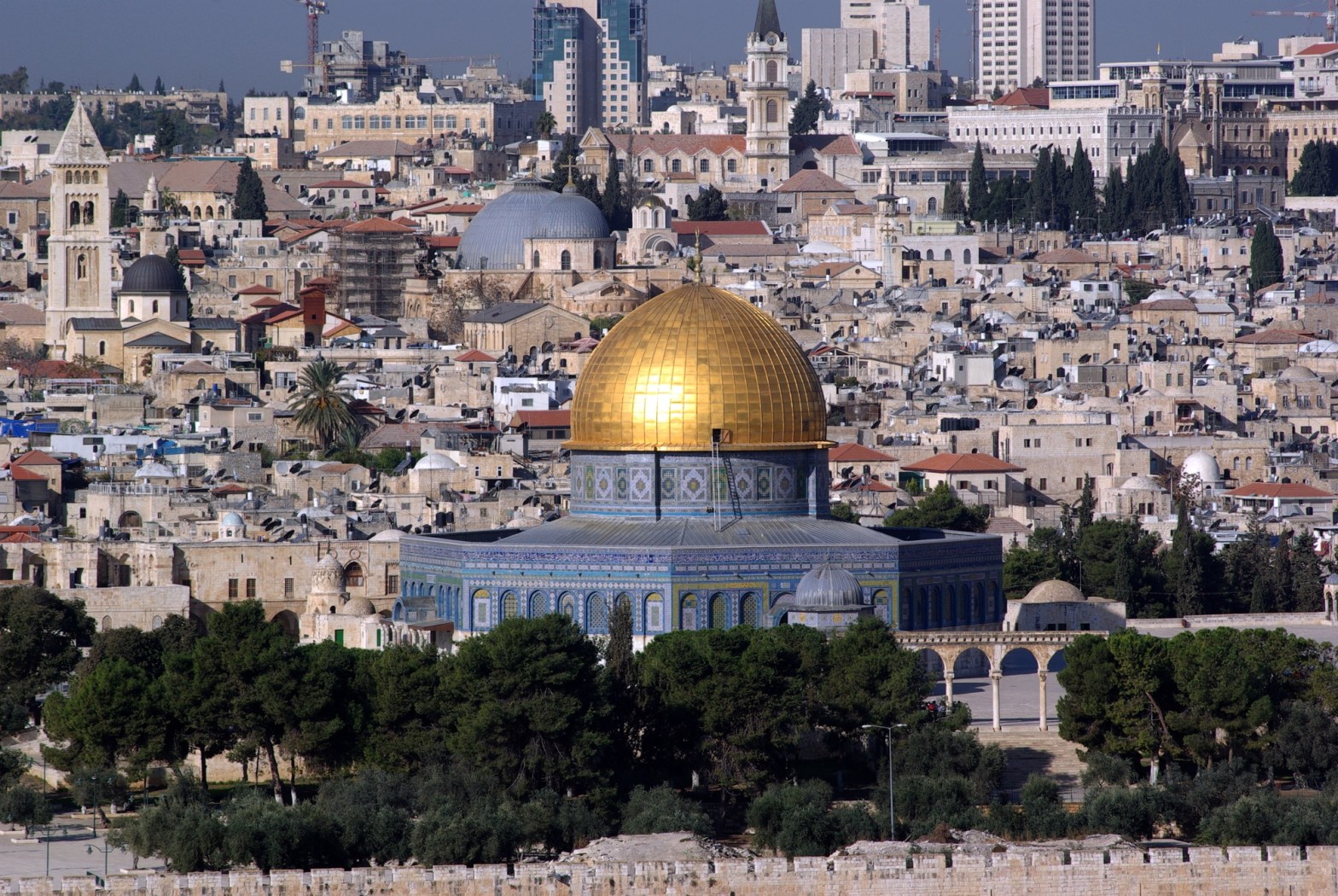
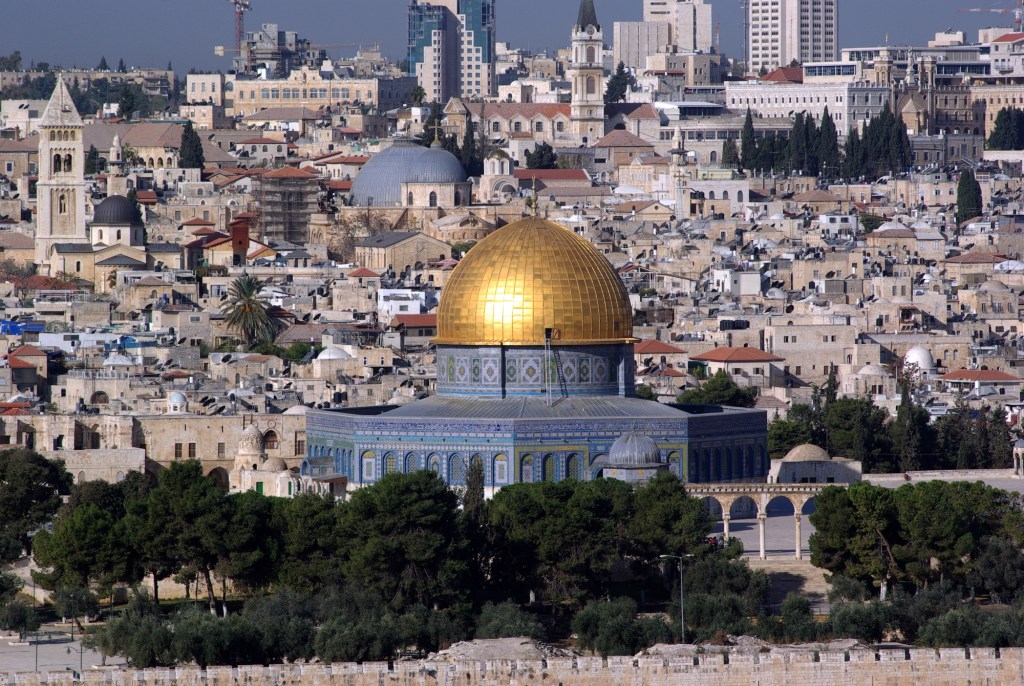
Historical Significance: Sham is home to many significant Islamic historical sites, including the Al-Aqsa Mosque in Jerusalem, which is the third holiest site in Islam.
- Promised Land in the Torah and the Bible:
Genesis 15, verse 18: In the Bible, Genesis 15, verse 18, states, “On that day the Lord made a covenant with Abram and said,
‘To your descendants I give this land, from the Wadi of Egypt to the great river, the Euphrates.'”
This covenant is seen as the promise of a specific territory to the descendants of Abraham.
Geographical Scope: The land promised in Genesis is often understood to encompass parts of modern-day Israel, Palestine, Lebanon, Jordan, and Syria, which overlaps significantly with the region known as Sham.
- Theological Connections:
Common Ancestry: Both Islamic and Judeo-Christian traditions trace their spiritual lineage to Abraham (Ibrahim in Islam), making the lands associated with him significant in both religions.
Shared Sacred Geography: The overlapping geographical regions underscore a shared sacred geography, with both traditions venerating places like Jerusalem and considering them central to their faith narratives.
Prophetic Tradition: In Islam, many of the prophets who are also revered in Judaism and Christianity are believed to have lived or traveled through Sham, further intertwining the religious significance of the region.
- Interfaith Perspectives:
Covenantal Promises: The concept of a promised land is a foundational element in Judaism and Christianity, while Islam emphasizes the sanctity and blessing of the land of Sham. Both perspectives highlight the importance of the region in God’s plan for humanity.
Spiritual Significance: For Muslims, Sham is seen as a land of great spiritual significance, while for Jews and Christians, the promised land represents the fulfillment of God’s covenant with Abraham.
In summary, the sacred land of Sham in Islam and the promised land referenced in Genesis 15, verse 18, share deep theological connections rooted in the common ancestry of Abraham, the overlapping sacred geography, and the profound spiritual significance attributed to these regions in both Islamic and Judeo-Christian traditions.
Prophet Muhammad (PBUH):
“Blessed is Al-Sham.” When asked why, he replied, “O people, you should know that the angels of the Most Merciful spread their wings over it.”
The connection between Islam and the land that God promised to Abraham in the Torah
Genesis 15, verse 18 reads:
“In the same day the Lord made a covenant with Abram, saying, Unto thy seed have I given this land, from the river of Egypt unto the great river, the river Euphrates”.
Genesis 15, verse 18 is a specific verse in the Bible, which is part of the book of Genesis in the Old Testament. It describes a covenant that God made with Abraham, promising him and his descendants land from the river of Egypt to the Euphrates River.
Did the establishment of Islam as the religion of Abraham in the Middle East or the Levant fulfill the promise of God to Abraham that his descendants through Ishmael would inherit the land from the border of Egypt to the Euphrates River as mentioned in the Torah or Genesis 15, verse 18?
Islamic scholars assert that the ancient scribes may have manipulated the Torah to favor Isaac instead of Ishmael. How do they present their argument?
Islamic scholars argue that the establishment of Islam in the Middle East and Levant region did fulfill God’s promise to Abraham regarding Ishmael’s descendants. They point out that Islam spread rapidly across this area in the 7th-8th centuries, bringing monotheistic worship of the God of Abraham to millions.
It is asserted that the ancient scribes who wrote the Torah may have altered the stories to show preference for Isaac’s descendants over Ishmael’s. They suggest that this bias may have been influenced by socio-political factors, such as the dominance of the Israelite tribes, which led to the emphasis on Isaac’s descendants in the biblical account.
Historically, the Arab-Islamic Caliphates after the rise of Islam in the 7th century did indeed conquer and control territories extending from Egypt to the Euphrates River, which matches the geographical extent of the land mentioned in Genesis 15, verse 18. This has led some to draw parallels between the spread of Islam and the fulfillment of the promise to Ishmael’s descendants.
From an Islamic theological perspective, the establishment of Islam in the Middle East and the Levant is seen as the fulfillment of God’s promise to Abraham, as it recognizes and upholds the significance of Ishmael’s lineage.
Islamic scholars argue that both Isaac and Ishmael are equally revered as prophets, and that their respective lineages are part of God’s overarching plan for humanity, with Hebrew prophets paving the way for the coming of Muhammad, the last prophet.
In summary, Islamic scholars argue that:
- The promise made to Abraham about his descendants inheriting the land could have been fulfilled through Ishmael.
- The Torah might have been altered over time to give greater emphasis to Isaac’s lineage and downplay Ishmael’s role.
- The rise of Islam and the influence of the descendants of Ishmael (through Prophet Muhammad) is seen as a fulfillment of God’s promise to Abraham.
- The spread of Islam and its dominance in the Middle East aligns with the geographical scope of the promise made to Abraham in the Torah, reinforcing the idea that Ishmael’s descendants inherited this blessing.
These arguments reflect a broader theological debate regarding the interpretation of ancient texts and the legacy of Abraham’s two sons, Isaac and Ishmael, in the context of religious history.
Holy Land of Palestine and Islamic Caliphate
Holy Quran Surah 21, verse71 reads:
.وَنَجَّيْنَاهُ وَلُوطًا إِلَى الْأَرْضِ الَّتِي بَارَكْنَا فِيهَا لِلْعَالَمِينَ
And We rescued Abraham and Lot to the land which We have blessed for the whole world.
From the Quranic perspective, some believe any attempt to secularise the Holy Land of Palestine rather than establish it through an Islamic caliphate would incur divine disasters. After all, Surah 21, verse 71, of the Quran references the Holy Land of Palestine as a blessing to the whole world, especially the Muslim world. How is this argument articulated?
The argument as mentioned is based on the interpretation of Surah 21, verse 71 of the Holy Quran. According to this interpretation, the verse refers to the rescue of Abraham and Lot and their settlement in a blessed land. Some believe that this blessed land mentioned in the verse is the Holy Land of Palestine.
From this perspective, it is argued that the Holy Land of Palestine is not just a geographical region, but a sacred land with spiritual significance. It is believed to have been blessed by Allah, and therefore, it is seen as a land that should be governed by Islamic principles and established as an Islamic caliphate.
Those who hold this viewpoint argue that any attempt to secularize or separate the Holy Land from its Islamic identity would go against divine will and result in negative consequences. They believe that only through the establishment of an Islamic caliphate can the true potential and blessings of the Holy Land be realized for the benefit of the Muslim world and humanity as a whole.
It’s important to note that interpretations of religious texts can vary among individuals and scholars. Different perspectives exist on the issue of the Holy Land and its governance, and it is a topic of ongoing debate and discussion within the Muslim community.

Nelson’s Foundational Bible Dictionary
PALESTINE
The land of the Israelites, only once called Palestine (Joel 3:4, KJV; “Philistia” NKJV). In the Old Testament the name signifies the “land of the Philistines.” It was called Canaan by the Hebrews in distinction from Gilead, east of the Jordan. When taken by Joshua, it became known as the land of Israel (1 Sa 13:19; Ma 2:20). It is called the land of promise (He 11:9) and the Holy Land (Ze 2:12). During the Middle Ages, the name “Holy Land” was the most popular. In those days,
Palestine was considered to be the center of the earth, and in a sense this is perfectly true. It is strategically located on a tiny strip of land on the eastern coast of the Mediterranean Sea which unites three continents (Africa, Asia, and Europe). It was situated between the most dominant ancient kingdoms of the world (Egypt, Babylon, Assyria, and Persia).
As occupied by the Israelites, the land extended from Mount Hermon on the north to Kadesh-barnea on the south and from the sea on the west to the Jordan and the region east of the river occupied by Reuben, Gad, and half-tribe of Manasseh. The Israelites never expanded their kingdom to include all the area promised to them in Numbers 34.
Islam as the Restoration of Abraham’s Original Teachings
Islam is considered a restored religion of Abraham, based on the perspective that both Judaism and Christianity have deviated from his original teachings.
Adherents of Islam assert that Judaism has altered the command regarding the sacrifice of Abraham’s son, holding that the son in question was Ishmael rather than Isaac.
Furthermore, they contend that Christianity has diverged from the tenet of monotheism by introducing the concept of the Trinity and modifying the practice of circumcision.
Therefore, from the Islamic viewpoint, Islam embodies the authentic restoration of the teachings of Abraham as presented in the Quran.
The Abrahamic and Sinai Covenants: An Islamic Perspective on Sacred Continuity and Relics
In the comparative theology of Abrahamic religions, the concept of divine covenants occupies a central role. Judaism, Christianity, and Islam all trace their spiritual lineage to the Prophet Abraham (Ibrahim عليه السلام), but they diverge in their understanding of which covenant is binding and through whom it continues.
One unique Islamic perspective highlights the theological and symbolic significance of sacred relics and the distinction between the Abrahamic Covenant and the Sinai (Mosaic) Covenant. This article explores how Islamic scholars frame the continuity of divine promise, drawing attention to the absence of Abrahamic relics in Jewish tradition and the centrality of Abrahamic symbolism in Islamic rites.
1. Two Covenants: Abrahamic and Sinai
The Abrahamic Covenant, as recorded in both the Bible and Qur’an, was made between God and Abraham, promising:
• A multitude of descendants
• A blessed lineage
• A divinely appointed land
In contrast, the Sinai Covenant—or Mosaic Covenant—was established generations later, between God and the Israelites through Moses at Mount Sinai. This covenant was heavily centered on legal ordinances, ritual purity, and national identity.
Islamic scholars underscore this distinction, arguing that while the Sinai Covenant was specific to the Israelites and conditional upon their obedience, the Abrahamic Covenant is universal, unconditional, and eternal, forming the foundation of Islamic monotheism.
2. Islamic Continuity: Inheriting the Abrahamic Legacy
From an Islamic theological standpoint, the Prophet Muhammad ﷺ is seen as a direct descendant of Abraham through his firstborn son Ishmael. This lineage is critical in Islamic thought, as it places Muhammad ﷺ and the Muslim ummah within the direct stream of Abrahamic blessing and covenantal responsibility.
Islam views itself not as a new religion, but as the revival and perfection of the original Abrahamic faith. This perspective is reinforced by the Qur’an’s emphasis on following “the religion of Abraham, the upright” (Qur’an 3:95), and by prophetic traditions affirming the the reconstruction of the House of God (Kaaba) by Abraham and Ishmael.
3. The Role of Sacred Relics
A distinctive element of the Islamic argument involves the presence or absence of Abrahamic relics:
In Islam, the Kaaba (House of God) in Mecca is considered the house built by Abraham and Ishmael (Qur’an 2:125–127), accompanied by the Black Stone (Hajar al-Aswad) and the Station of Abraham (Maqam Ibrahim). These physical sites serve as living relics of the Abrahamic legacy, venerated by over a billion Muslims worldwide.
In Judaism, no physical relic directly associated with Abraham has been preserved. The most significant ancient artifact, the Ark of the Covenant, belongs to the Mosaic era and is tied to the Sinai Covenant, not Abraham. Moreover, it was lost during the destruction of the First Temple.
Islamic scholars point to this contrast to suggest that the direct covenantal heritage of Abraham has been preserved in Islam, not in Judaism. The absence of relics connected to Abraham in Jewish tradition is interpreted by some as symbolic of a rupture in the transmission of his legacy.
4. The Ark of the Covenant: Significance and Loss
The Ark of the Covenant remains an iconic symbol in Jewish history. It was said to contain the tablets of the Law (Torah) and represented the divine presence among the Israelites. However, from an Islamic perspective, the Ark is not seen as an Abrahamic relic but rather as a Mosaic artifact.
Its eventual loss during the Babylonian destruction of the First Temple is often viewed by Islamic scholars as a symbolic termination of the Sinai Covenant, marking the end of that specific historical phase of divine interaction.
5. Universality of the Abrahamic Covenant in Islam
A key theme in Islamic theology is the universality of the Abrahamic Covenant. Unlike the Sinai Covenant, which was exclusively for the Children of Israel, the Abrahamic Covenant—according to Islamic understanding—was meant for all peoples who follow the monotheistic path of submission to God (Islam).
This universalism is enshrined in the Qur’an (Surah 22:78):
“It is He who has named you Muslims before and in this [revelation], that the Messenger may be a witness over you and you may be witnesses over mankind.”
Thus, Islam positions itself as the final and universal expression of the Abrahamic mission, encompassing all of humanity beyond ethnic or tribal lines.
6. Supersession and Theological Fulfillment
While Islam respects the prophets of Judaism and Christianity, many Islamic scholars adopt a form of theological supersessionism: the idea that Islam, as revealed to Muhammad ﷺ, completes and supersedes previous revelations. This includes both the Abrahamic and Mosaic covenants.
According to this view, the Qur’an is the final testament, and the Muslim community (ummah) is the rightful heir to Abraham’s spiritual legacy, fulfilling his vision of pure monotheism (tawḥīd) untainted by tribal exclusivism or theological alteration.
Conclusion
The Islamic view on the Abrahamic and Sinai covenants is deeply rooted in both theological reasoning and historical symbolism. By emphasizing the continuity of Abrahamic rites, the preservation of sacred relics, and the universal scope of its message, Islam asserts itself as the true fulfillment of the covenant established with Abraham. The absence of equivalent Abrahamic relics in Jewish tradition and the eventual disappearance of the Ark are seen not as mere historical events, but as spiritual markers—signifying a shift from the tribal covenant of Sinai to the universal mission embodied by Islam.
While these perspectives are uniquely Islamic and may not be shared by Jewish or Christian theology, they contribute meaningfully to the broader discourse on how each faith understands its relationship with Abraham, the friend of God.
 ABRAHAMIC THEOLOGY