Azahari Hassim
If Abraham had been instructed by God to sacrifice Ishmael instead of Isaac, it could be argued that Islam and Muhammad have a legitimate claim as a true religion and prophet. This argument can be further explained by examining the differences in the narrative of Abraham’s sacrifice between Islamic and Judeo-Christian traditions.
The story of Abraham being commanded to sacrifice his son is significant in Judaism, Christianity, and Islam. However, the key difference lies in the identity of the son involved. In Jewish and Christian traditions, it is Isaac who was nearly sacrificed, while in Islamic tradition, it is believed to be Ishmael. Although Ishmael’s name is not explicitly mentioned in the Quran, Muslims believe that he was the son whom Abraham was instructed to sacrifice.
If one were to argue for the legitimacy of Islam and Muhammad as a prophet based on the premise that Ishmael was the son intended for sacrifice, the argument might be structured as follows:
- Shared Abrahamic Roots: All three monotheistic religions—Judaism, Christianity, and Islam—trace their spiritual lineage to Abraham, recognizing him as a patriarch. The story of Abraham’s willingness to sacrifice his son at God’s command is seen as a test of faith in all three traditions.
- Islamic Narrative: The Quran (Surah 37, verses 100 to 113) recounts the story of Abraham’s willingness to sacrifice his son as a demonstration of his obedience to God. While the Quran does not name the son, the majority of Islamic traditions and interpretations identify the son as Ishmael, the eldest son of Abraham through Hagar. This interpretation is derived from the order of events in the Quran, indicating that the promise of Isaac’s birth occurred after the sacrifice story, leading to the conclusion that Ishmael was the son mentioned.
- Prophetic Lineage: In Abrahamic theology, the near sacrifice of Ishmael is regarded as a foreshadowing of Muhammad’s prophethood. This connection between Ishmael’s near-sacrifice and Muhammad’s lineage plays a vital role in confirming Muhammad’s position as a prophet in Islam, serving as a fundamental aspect of the faith and offering valuable insight into the validity of his prophethood.
- Preservation of Revelation: Muslims believe that the Quran is the final and unaltered word of God, preserved exactly as it was revealed to Muhammad. They argue that earlier scriptures, such as the Torah and the Bible, have been altered or misinterpreted over time. In this view, the Quran corrects these alterations, and the indication that Ishmael was the son to be sacrificed is seen as the correct version of the story.
- Continuity of Prophethood: Islam acknowledges the prophets of Judaism and Christianity but considers Muhammad to be the last prophet, who came to restore the original monotheistic faith and to correct deviations that had entered earlier religions. The story of Ishmael’s near-sacrifice, then, is seen as part of this corrective message.
- Theological Implications: The identification of the son in the story of Abraham’s sacrifice holds great significance as it symbolizes the heir of the Abrahamic covenant. In Islamic tradition, designating Ishmael as the son underscores his pivotal role in their religious history and bolsters the credibility of the Islamic faith for Muslims. This underscores the crucial role that lineage and inheritance play within religious narratives.
In conclusion, the narrative of Ishmael as the son intended for sacrifice strengthens Islam’s theological foundation and affirms Muhammad as a prophet. It shows Islam’s connection to the Abrahamic tradition, preservation of divine revelation, and role in restoring monotheistic beliefs. This narrative difference also highlights the interconnectedness and differences among the three Abrahamic faiths, shaping their unique theological identities.
George Bernard Shaw:
“I have studied him (Muhammad) – the wonderful man – and in my opinion far from being an anti-Christ, he must be called the Savior of Humanity.”
Ishmael’s Story and Scriptural Alterations in The Torah: Islamic Perspectives
Genesis 21, verses 9 to 10, reads:
But Sarah saw that the son whom Hagar the Egyptian had borne to Abraham was mocking, and she said to Abraham, “Get rid of that slave woman and her son, for that woman’s son will never share in the inheritance with my son Isaac.”
Genesis 22, verse 2, reads:
Then God said, “Take your son , your only son, whom you love, Isaac, and go to the region of Moriah. Sacrifice him there as a burnt offering on a mountain I will show you. ”
Here is how the Jewish scribe manipulated Ishmael’s story:
- The age of Ishmael at the time of his departure from Abraham’s house.
- Abraham’s son, who was offered as a sacrifice.
Some Islamic scholars suspect that the scribes tampered with the story of Hagar and Ishmael in the Torah. It is argued that Genesis 21, verses 9 to 10, may have been added later because Ishmael and Hagar had already left Abraham’s house long before Isaac was born, with Ishmael being an infant according to Islamic tradition.
Similarly, some question whether Genesis 22, verse 2, could refer to Ishmael, since Isaac had never been Abraham’s only son, whereas Ishmael had been for fourteen years before Isaac was born. How is this Islamic viewpoint presented?
The Islamic perspective on the stories of Hagar, Ishmael, and Isaac, as presented in the Torah, differs significantly from the Jewish and Christian narratives. These differences have led some Islamic scholars to question the authenticity of certain Biblical passages, suggesting possible later additions or alterations.
In the Islamic tradition, Hagar and Ishmael’s story is seen through a different lens compared to the Biblical account. According to Islamic belief, Ishmael was an infant when he and his mother Hagar were left in the desert, which contrasts with the Biblical narrative where Ishmael is depicted as a young boy during this event. Some Islamic scholars argue that certain verses in Genesis, such as Genesis 21:9-10, might have been added later, as they imply that Ishmael was older and capable of mocking Isaac, which would not align with the Islamic timeline where Ishmael had already left before Isaac’s birth.
The question of who was the intended son of sacrifice is another point of divergence. In the Quran, it is generally believed that Ishmael was the son whom Abraham was commanded to sacrifice, whereas the Bible identifies Isaac as the intended sacrifice. This discrepancy has led some Islamic scholars to suggest that Genesis 22, verse 2, which refers to Isaac as Abraham’s “only son,” might be inaccurate, as Ishmael was Abraham’s firstborn and was his only son for fourteen years before Isaac’s birth. The argument is that the description of Isaac as the “only son” could have been a later addition to emphasize Isaac’s significance in the Jewish tradition.
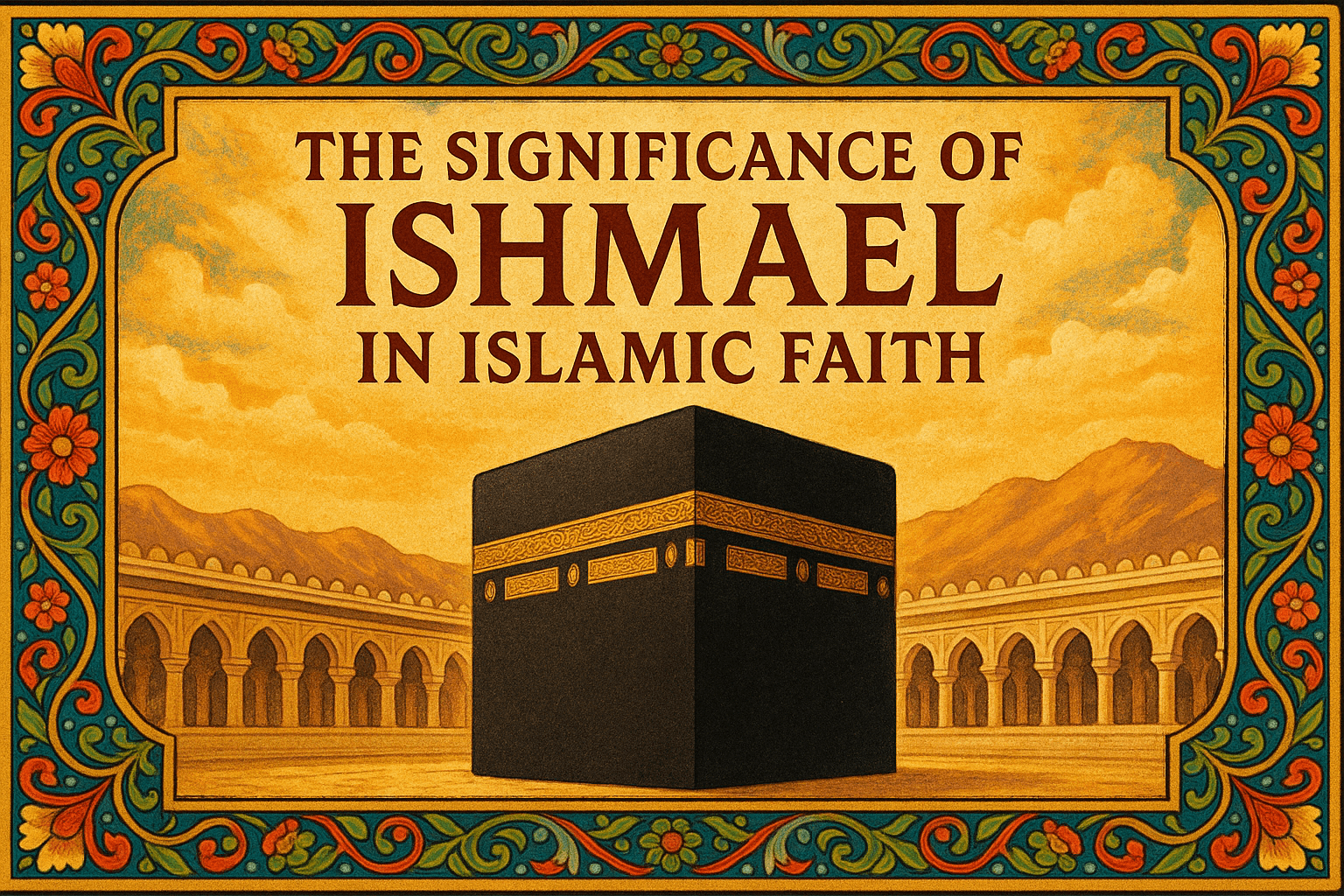
Islamic narratives emphasize the significance of Ishmael and his descendants, linking them to the lineage of the Prophet Muhammad. The Islamic tradition holds that Abraham and Ishmael together built the Kaaba in Mecca, a central element in Islamic faith, which is not mentioned in the Bible. The Quran and Islamic teachings often highlight the spiritual and prophetic roles of both Ishmael and Isaac, but with a focus on Ishmael’s role in the lineage leading to Islam.
Conclusion
The Islamic viewpoint on the story of Hagar and Ishmael in the Torah is characterized by skepticism towards the authenticity of certain verses. Islamic scholars argue that the timeline and events described in the Torah may have been altered, and that Ishmael may have been the son referred to in Genesis 22:2 instead of Isaac.

The Role of Prophets in the Bible
Normally nābîʼ translates as “prophet,” but it may also mean “spokesman” or “speaker.”
While scholars debate the derivation of nābîʼ, the majority relate the word to nabʼium in Akkadian, a passive form that means “the called one.” Numerous prophets wrote of this “call” experience (Isa. 6; Jer. 1; Ezek. 2; Amos 7). Although OT writers list Abraham as the first nābîʼ (Gen. 20:7), prophetism proper begins with Moses (Deut. 18:15) and continues uninterrupted through the NT (Mt. 21:26). Most biblical readers will recognize the names of Elijah (1 Ki. 18:22) and Elisha (2 Ki. 6:12) in the impressive succession of prophets.
Most of the latter books of the OT were named after the prophets who wrote them. On some occasions, a woman could be a prophetess (e.g., Deborah, Jdg. 4:4; Huldah, 2 Ki. 22:14). Historically speaking, a prophecy is a communication from God to the people through a chosen representative, inspired by God’s Spirit.
Old Testament prophets in general addressed contemporary issues among God’s people, such as idolatry, selfishness on the part of Israel’s leaders, and issues of social injustice (Amos 5:7-13). They often spoke words of judgment against the people, but they also offered hope if the people repented. Sometimes their words looked ahead to the far distant future, to the coming messianic age (e.g., Isa. 53; Dan. 7). Moses in particular prophesied of a coming final prophet (Deut. 18:15-18).
 ABRAHAMIC THEOLOGY