Azahari Hassim
What was Hagar’s religion according to the Bible? Did she follow Abraham’s religion?
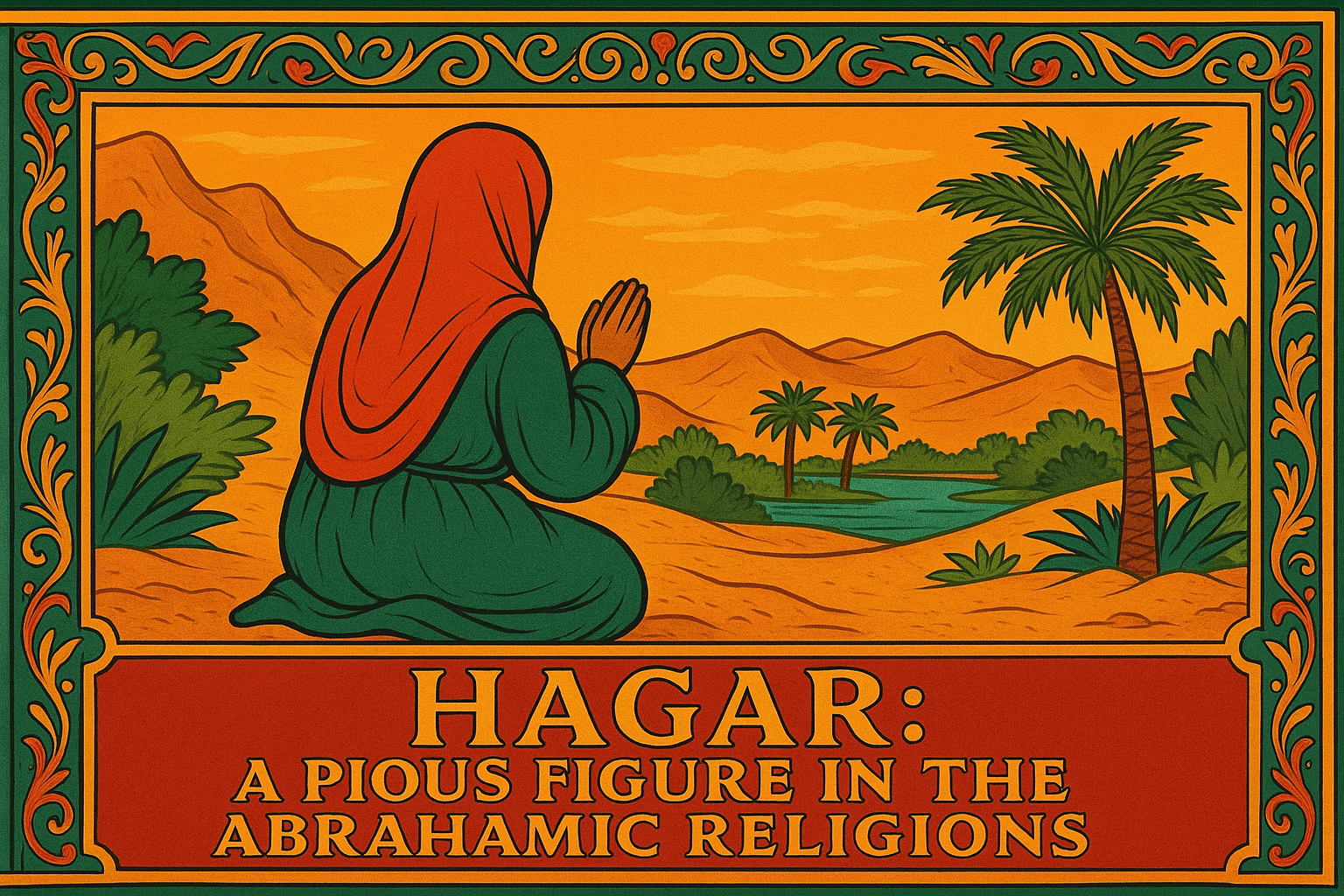
Hagar is an important figure in the Abrahamic religions, which include Judaism, Christianity, and Islam. In the Bible, Hagar was an Egyptian servant of Sarah, Abraham’s wife. According to the biblical account, Hagar bore a son named Ishmael to Abraham. In Islamic tradition, it is believed that Hagar and Ishmael settled in Mecca and that they are ancestors of the Prophet Muhammad.
As for her religion specifically, since she was a servant of Abraham’s household and part of his family’s life at that time, it can be assumed that she followed their religious practices. So yes, it can be said that she professed the religion of Abraham during her time with him.
Was Hagar considered a pious woman from a biblical perspective?
Hagar is often regarded as a pious and faithful woman in religious traditions. In the Bible, she demonstrated great faith when she obeyed God’s command to return to Sarah after fleeing from her mistreatment. She also received divine reassurance and promises regarding her son Ishmael’s future.
In Islamic tradition, Hagar is highly respected as a noble and patient woman who endured hardships while fulfilling her role as a mother and wife. Her story serves as an example of steadfastness, trust in God, and perseverance.
So overall, Hagar is generally seen as a virtuous figure in both biblical and Islamic narratives.
Was she a prophetess?
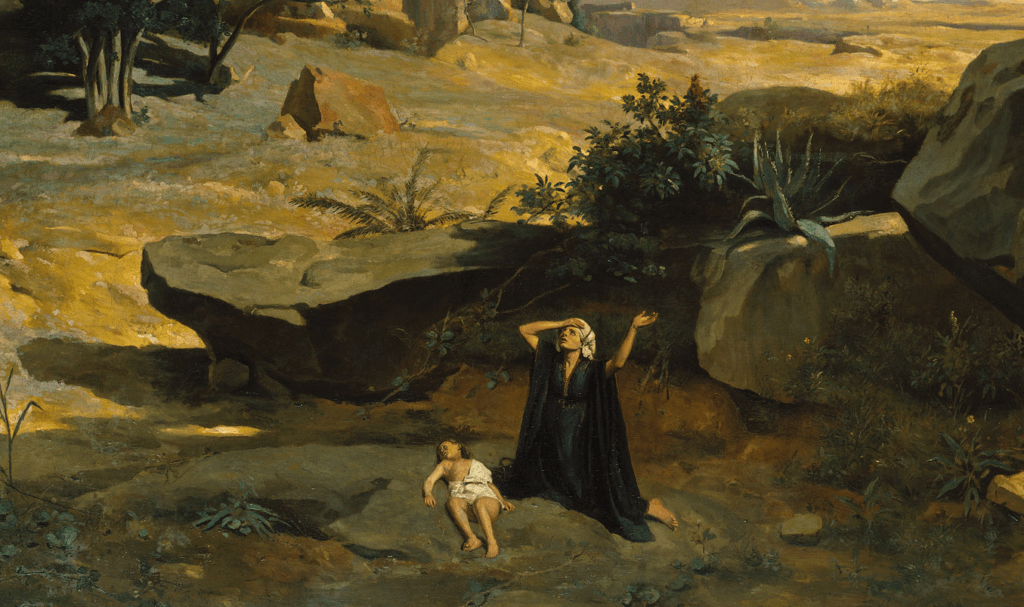
While Hagar is not explicitly referred to as a prophetess in the Bible, she did have encounters with God and received divine messages. In Genesis 16, verse 7 to 14, an angel of the Lord appears to Hagar in the wilderness and delivers a message about her future and that of her son Ishmael. This interaction can be seen as a form of divine revelation.
In Islamic tradition, Hagar is considered to be one of the honored women who received revelations from God through angels. Her story is mentioned in the Hadith, where she plays a significant role as an exemplary figure.
So while she may not hold the title of “prophetess” like some other biblical figures, Hagar’s experiences with divine communication make her an important spiritual figure in both religious traditions.
“Hagar is a symbol of survival, of resourcefulness and resilience in the face of hardship. She is a figure of courage, a mother who does what she must to ensure the survival of her child in the wilderness.”
Delores S. Williams (theologian and scholar, known for her work in womanist theology)
Midrashic Perspectives on Hagar: Origins, Spiritual Encounters, and Legacy
In Jewish tradition, Hagar, the mother of Ishmael, is a significant figure, and various Midrashic texts provide insights and interpretations about her life and experiences. Below are some key Midrashic quotations and interpretations related to Hagar:
1. Hagar as Pharaoh’s Daughter
Midrash Genesis Rabbah 45:1: This Midrash suggests that Hagar was the daughter of Pharaoh, the king of Egypt. When Pharaoh saw the miracles God performed for Sarah, he said, “It is better for my daughter to be a maidservant in this household than a mistress in another household.” Therefore, he gave his daughter Hagar to Sarah as a handmaid.
2. Hagar’s Name
Midrash Genesis Rabbah 45:9: The name “Hagar” is interpreted as meaning “reward” or “payment” because Hagar was given to Abraham as a reward for his good deeds. Another interpretation is that her name derives from the Hebrew word “ger,” meaning “stranger,” emphasizing her status as an outsider.
3. Hagar and the Angels
Midrash Genesis Rabbah 45:7: This Midrash elaborates on the story of Hagar’s encounter with the angel in the wilderness. It notes that Hagar was the first woman to whom an angel appeared and that she was blessed with multiple angelic visits, highlighting her unique spiritual experience. The Midrash also emphasizes that Hagar gave names to God and the place of the encounter, reflecting her deep religious awareness.
4. Hagar’s Return to Abraham
Midrash Genesis Rabbah 45:8: When Hagar fled from Sarah’s harsh treatment, the angel instructed her to return and submit to Sarah’s authority. The Midrash explains that this was a test of Hagar’s humility and obedience, qualities that were necessary for her to fulfill her role in the divine plan.
5. Hagar as Keturah
Midrash Genesis Rabbah 61:4: Some Midrashic texts suggest that Hagar and Keturah, the woman whom Abraham marries after Sarah’s death, are the same person. The Midrash suggests that after Hagar was sent away, she later returned to Abraham under the name Keturah, which means “incense,” symbolizing that her deeds had become pleasing to God.
6. Hagar’s Legacy
Midrash Pirkei DeRabbi Eliezer 30: This Midrash notes that Hagar was a righteous woman and that Ishmael inherited her good qualities. It emphasizes her endurance and faith in God, particularly in her ability to survive in the desert and care for her son, Ishmael.
Summary
In the Midrash, Hagar is portrayed with complexity and depth, often with an emphasis on her noble origins, her spiritual experiences, and her trials. Despite her status as a maidservant and an outsider, Hagar is recognized for her strength, faith, and the critical role she played in the unfolding of the Abrahamic narrative.
Hagar: A Pillar of Faith and Resilience in Islamic Tradition
Hagar, also known as Hajar in Arabic, holds a revered place in the hearts of Muslims worldwide. Her story is a testament to faith, resilience, and the unshakable bond between a mother and her child. Let’s explore her significance:
1. Hagar’s Journey:
Hagar was an Egyptian woman who became the wife of Prophet Ibrahim (Abraham) and the mother of Isma’il (Ishmael).
Her story is prominently featured in the Quran, where her unwavering faith and dedication shine through.
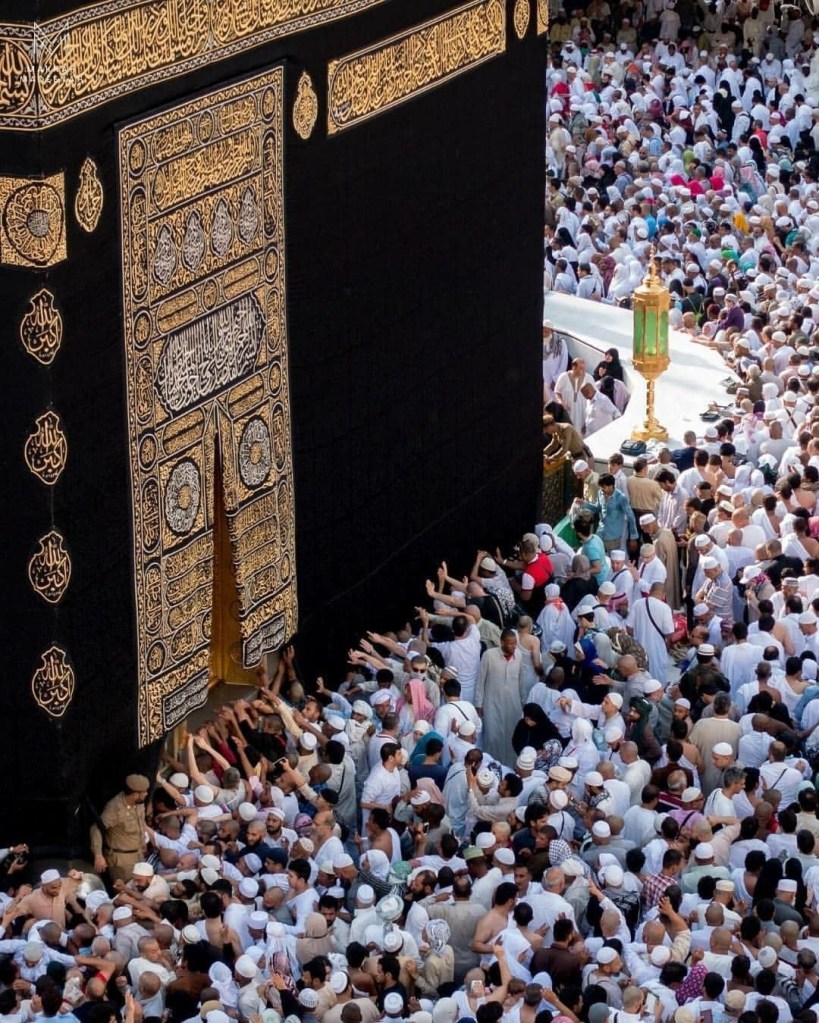
Ibrahim received a divine command to leave Hagar and Isma’il in the desolate desert of Mecca (now the holy city of Islam).
Hagar’s sacrifice in obeying this command is a testament to her unwavering faith and trust in Allah.
2. Hagar’s Faith:
Despite daunting challenges, she endured the scorching desert heat and harsh conditions for her infant child’s future.
As water ran out, she ran between the hills of Safa and Marwah in search of sustenance for her infant son, leading to the emergence of the ritual of Sa’i during the annual Hajj pilgrimage.
A miraculous spring, known as Zamzam, gushed forth to provide sustenance for her and Ishmael, establishing Mecca as a sacred place.
3. Legacy and Rituals:
Hagar’s resilience, trust in Allah, and devotion to her child serve as an enduring example for Muslims worldwide.
The Sa’i ritual during Hajj, where pilgrims retrace Hagar’s steps between Safa and Marwah, symbolizes determination, faith, and seeking divine guidance.
Hagar’s story reminds us of the importance of patience, faith, and trusting in Allah’s plan, even in adversity. 🌟
 ABRAHAMIC THEOLOGY