Azahari Hassim
Some interpret Song of Solomon 5, verses 10 to 16, as a depiction of Muhammad using hyperbolic language. What is the comparative religious perspective on the argument regarding the manifestation of the name Muhammad in verse 16, expressed in the plural form as a sign of respect?
The Islamic perspective on the interpretation of Song of Solomon 5, verses 10 to 16, particularly verse 16, as a reference to the Prophet Muhammad stems from the claim that the Hebrew word “מַחֲמַדִּים”, found in this verse, is remarkably similar to the name Muhammad.
This word is translated into English as “altogether lovely,” “very pleasant,” or similar phrases, but some Muslims argue that it should be understood as a direct reference to Muhammad, given the phonetic similarity and the significance of the name.
In Islamic tradition, Muhammad is believed to be the final prophet sent by God to guide humanity, and his coming is interpreted by some Muslims as having been foretold in previous scriptures, including the Bible. The argument here hinges on the linguistic and phonetic connection between the Hebrew word in the text and the name Muhammad.
Proponents of this view argue that the use of “מַחֲמַדִּים” in the plural form is a stylistic or honorific form in Hebrew, used to convey respect or exaltation, rather than a literal plural. This is seen as analogous to how Arabic uses certain plural forms to denote honor or respect, rather than quantity.
The verses Song of Solomon 5, verses 10 to 16 read:
Verse 10: My beloved is white and ruddy,
Chief among ten thousand.

Verse 11: His head is like the finest gold;
his locks are wavy,
and black as a raven.

Verse 12: His eyes are like doves
by the rivers of waters,
washed with milk,
and fitly set.

Verse 13: His cheeks are like a bed of spices,
banks of scented herbs.
His lips are lilies,
Dripping liquid myrrh.

Verse 14: His hands are rods of gold
set with beryl.
His body is carved ivory
inlaid with sapphires.

Verse 15: His legs are pillars of marble
set on bases of fine gold.
His countenance is like Lebanon,
excellent as the cedars.

Verse 16: His mouth is most sweet,
yes, he is altogether, מַחֲמַדִּים (lovely).
This is my beloved,
and this is my friend,
O daughters of Jerusalem.
Michael H. Hart:
“My choice of Muhammad to lead the list of the world’s most influential persons may surprise some readers and may be questioned by others, but he was the only man in history who was supremely successful on both the religious and secular level.”
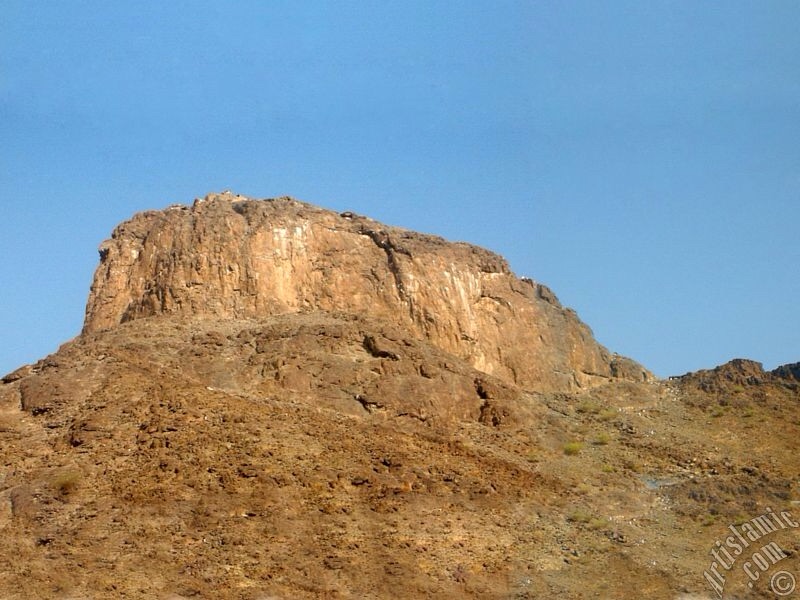
The biblical prophecy of Muhammad receiving his first revelation
Book of the Prophet Isaiah chapter 29, verse 12 reads:
“And the scroll is delivered to him that is not learned, saying, Read this, I pray thee: and he saith, I am not learned.”
Some believe Isaiah 29 verse 12 is the prophecy of Muhammad receiving his first revelation on Mount Hira in Mecca through the angel Gabriel. How is this interpretation explained?
The interpretation of Isaiah 29 verse 12 as a prophecy of Muhammad’s first revelation is based on the following parallels:
The scroll: In Isaiah 29 verse 12, a scroll is given to someone who cannot read, symbolizing the inability of the people to understand God’s message. This is seen as analogous to Muhammad’s illiteracy, as he was unable to read or write until he received the revelation.
The illiterate recipient: The inability to read is further emphasized in the verse, suggesting that the message is not meant for those who are already learned or knowledgeable. This is seen as a reference to Muhammad’s lack of formal religious education, as he was not a priest or scholar.
Prophecy of a New Prophet: Some interpretations suggest that Isaiah 29 verse 12 may be a prophecy of a new prophet who would come after Isaiah. This aligns with the Islamic belief that Muhammad was the last prophet in the Abrahamic tradition.
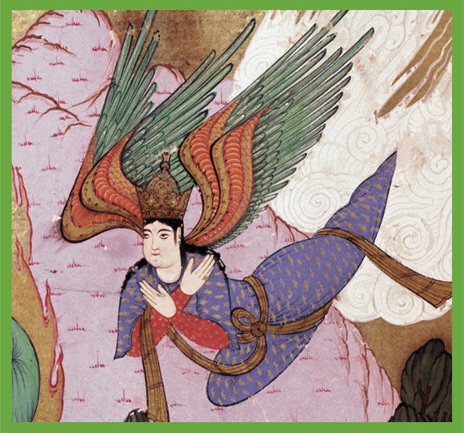
The early life of Muhammad
According to Islamic tradition, in around 582 ce a Christian hermit, Bahira, was living in the Syrian desert when, one day, a boy passing by with a camel train caught his attention. After talking with him, Bahira concluded that the sign of prophecy was upon the boy. He was destined for greatness, Bahira told the boy’s guardians, and should be cared for well. The young boy was Muhammad, who became the prophet of Islam and, according to Muslims, God’s Final Messenger.
Muhammad was born in 570 in Mecca (Makkah) into the Banu Hashim clan of the Quraysh tribe. His father died before he was born and his mother when Muhammad was six. His grandfather, Abd al-Muttalib, took him into his care until he, too, died when Muhammad was eight. From this point, his uncle Abu Talib raised him. They lived in meager circumstances and Muhammad worked with his uncle as a traveling merchant. He later married and had children, and was known for his kindness to the poor, but otherwise Muhammad led an unexceptional life
The angel says “Read” Muhammad often climbed to a cave on Jabal al-Nur (Mountain of Light) in the Meccan Valley to meditate for days at a time. In 610, on the 27th night of what is now Ramadan (the ninth month of the Islamic calendar), he was awoken from sleep in his cave by a divine presence. According to tradition, it was the angel Jibreel (the Arabic name for Gabriel) who appeared to him. The angel simply commanded Muhammad to “Read!”
A confused Muhammad replied, “I am not a reader.” The angel embraced Muhammad and commanded him again to read. This happened three times before Muhammad asked, “What shall I read?” Jibreel responded with the very first revelation, what is now the first five verses of chapter 96 of the Quran: Read in the name of your Lord who created; created man from clots of blood. Read! Your Lord is the Most Bountiful One, who by the pen taught man what he did not know.
 ABRAHAMIC THEOLOGY