Azahari Hassim
There are those who argue that the fulfillment of the prophecy in Genesis 12, verses 2 to 3 can be seen in the Islamic Hajj as mentioned in Surah 22, verse 27, of the Quran, while Genesis 15, verse 18, is believed to be fulfilled through the spread of Islam as stated in Surah 24, verse 55, of the Quran, and Genesis 22, verse 18, through the figure of Muhammad, as referenced in Surah 21, verse 107, of the Quran. It is believed Ishmael, rather than Isaac, was the son of a near sacrifice. How do they present their argument?
Those who argue that certain prophecies in the Hebrew Bible (Genesis) are fulfilled through Islam present their argument by drawing parallels between specific verses in the Bible and corresponding verses in the Quran. Here’s a detailed look at how they present their argument:
- Genesis 12, verses 2 to 3, and the Islamic Hajj (Surah 22, verse 27):
Genesis 12, verses 2 to 3: God promises Abraham that his descendants will become a great nation and that all peoples on earth will be blessed through him.
Surah 22, verse 27: This verse in the Quran commands Abraham to proclaim the pilgrimage (Hajj) to all humanity, promising that people will come to it from every distant place.
Argument: Proponents argue that the fulfillment of the prophecy in Genesis 12, verses 2 to 3 can be seen in the annual Islamic pilgrimage to Mecca (Hajj), which attracts millions of Muslims from around the world, thus becoming a significant gathering of Abraham’s spiritual descendants and a blessing to all nations.
- Genesis 15, verse 18, and the spread of Islam (Surah 24, verse 55):
Genesis 15, verse 18: God makes a covenant with Abraham, promising his descendants land from the river of Egypt to the Euphrates.
Surah 24, verse 55: This verse states that God has promised those who believe and do good deeds that they will be made successors on the earth, establish their religion, and replace their fear with security.
Argument: They argue that the spread of Islam and the establishment of Muslim rule across vast territories, including the lands mentioned in Genesis 15, verse 18, is a fulfillment of this biblical promise. The spread of Islam is seen as the realization of the divine promise to give Abraham’s descendants through Ishmael dominion and establish a lasting religious legacy.
- Genesis 22, verse 18 and the figure of Muhammad (Surah 21, verse 107):
Genesis 22, verse 18: God tells Abraham that through his offspring all nations on earth will be blessed because he obeyed God.
Surah 21, verse 107: This verse refers to Muhammad as a mercy to all the worlds.
Argument: The argument here is that Muhammad, considered a descendant of Abraham through Ishmael, fulfills the promise that all nations will be blessed through Abraham’s offspring. The message of Islam brought by Muhammad is seen as a universal blessing, aligning with the biblical prophecy.
- The near sacrifice of Ishmael rather than Isaac:
Islamic tradition: It holds that it was Ishmael, not Isaac, whom Abraham was asked to sacrifice. This belief is based on interpretations of Quranic verses and Hadith (prophetic traditions).
Genesis 22: The Bible mentions Isaac as the son who was to be sacrificed.
Argument: Those presenting this viewpoint argue that the Quranic narrative and Islamic tradition correct or clarify the identity of the son in the near-sacrifice story, suggesting that Ishmael was the intended sacrifice. This reinforces the connection between Abraham’s covenant and the lineage through Ishmael, leading to the rise of Islam and the prophetic mission of Muhammad.
In summary, these arguments are based on interpreting and correlating specific biblical prophecies with Quranic revelations and historical events in Islam. This perspective emphasizes the continuity and fulfillment of Abrahamic promises through the spread and practices of Islam, with a particular focus on the significance of Ishmael and his descendants.
Holy Quran 2:124
Remember, when his Lord tried Abraham by a number of commands which he fulfilled, God said to him: “I will make you a leader among men.” And when Abraham asked: “From my progeny too?” the Lord said: “My pledge does not include transgressors.”
Theology
study of God or gods, either that which is known by reasoned deduction from the natural world (natural theology) or known only through divine revelation (revealed theology), as in the scriptures of Christianity, Islam, or other religions.
Islam as the Restored Faith of Abraham: Addressing Perceived Deviations in Judaism and Christianity
Islam is considered as a restored religion of Abraham due to Judaism corrupting their text as regards a son whom Abraham was commanded to sacrifice. At the same time, Christianity corrupted their scripture concerning the oneness of God and the rite of circumcision. What is the explanation for this?
The belief that Islam is a restored religion of Abraham stems from the belief that both Judaism and Christianity deviated from the original teachings of Abraham. According to Islamic beliefs, Judaism corrupted their text by incorrectly interpreting the command to sacrifice a son, as mentioned in the Quran. Muslims believe that Abraham was commanded to sacrifice his son Ishmael, not Isaac as mentioned in the Hebrew Bible.
Similarly, Muslims believe that Christianity corrupted their scripture by deviating from the belief in the oneness of God (monotheism) and by modifying the rite of circumcision. Islam emphasizes the concept of tawheed, which is the belief in the oneness of God, and questions the Trinity as mentioned in Christian theology. Islam also practices circumcision, although the method and significance may differ from those in Judaism and some Christian traditions.
These differences and perceived corruptions are seen from the perspective of Islamic theology, which asserts that Islam is the restoration of the original teachings of Abraham, as revealed in the Quran.
What is Abrahamic theology?
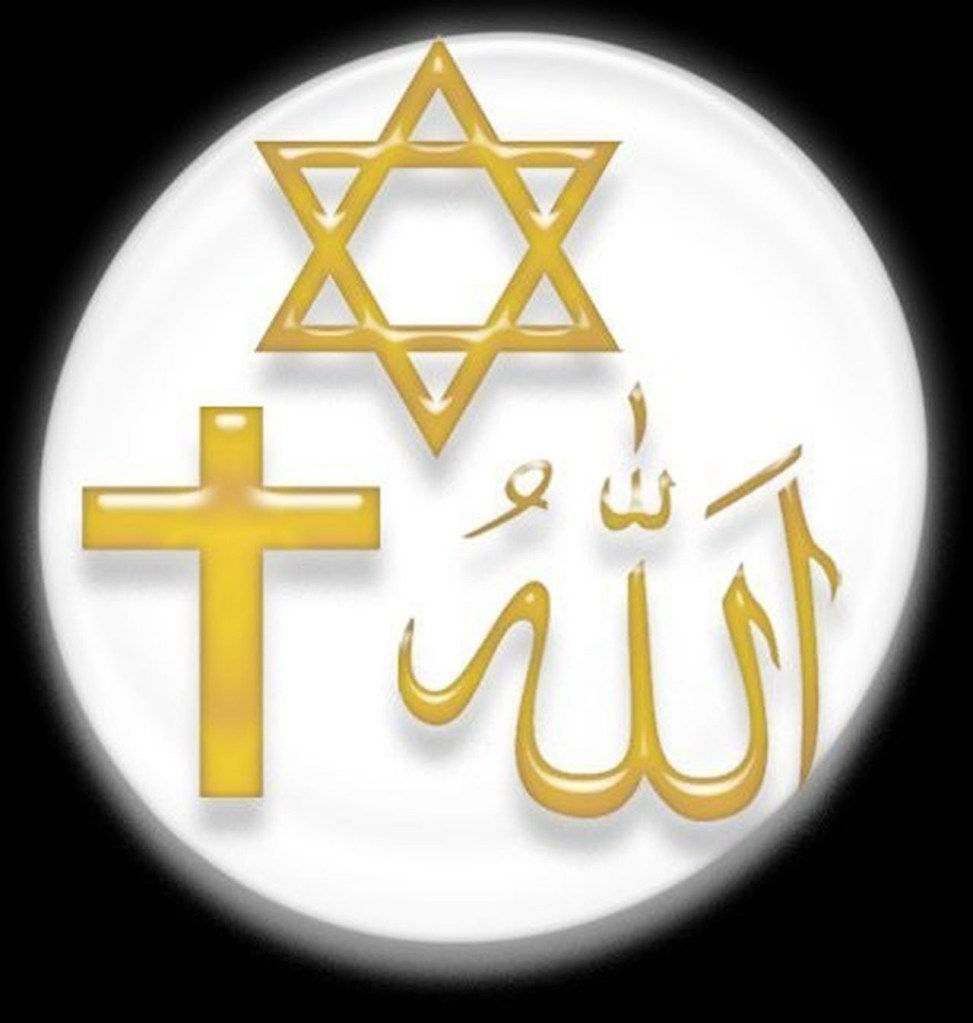
Abrahamic theology refers to the religious beliefs and teachings that are derived from the figure of Abraham in the three major monotheistic religions: Judaism, Christianity, and Islam. These religions all trace their origins back to Abraham, who is considered a central figure in their respective faiths.
Abrahamic theology emphasizes the belief in one God, ethical monotheism, and the importance of faith and obedience to God’s will. It also includes teachings on morality, ethics, salvation, and eschatology (the study of end times).
While there are differences in theological interpretations among these three religions, they all share common themes such as the belief in a single deity who created the universe and has a plan for humanity. The stories of Abraham’s faithfulness and obedience to God serve as foundational narratives for each religion.
Overall, Abrahamic theology serves as a unifying factor among Judaism, Christianity, and Islam despite their theological differences. It provides a framework for understanding the relationship between humanity and divinity while emphasizing shared values such as compassion, justice, and love for one another.
What is the position of Abraham within the Islamic faith?
In Islam, Abraham (known as Ibrahim in Arabic) is a highly revered prophet and a key figure in the faith. He is considered one of the greatest prophets and is often referred to as a “Friend of God” (Khalilullah). His significance in Islam can be summarized in several key points:
- Father of Monotheism: Abraham is regarded as the patriarch of monotheism. He is seen as a model of faith and submission to the one God (Allah), and his commitment to monotheism is emphasized in Islamic teachings.
- Prophet and Messenger: Abraham is recognized as one of the major prophets who received divine revelation. He is mentioned numerous times in the Quran, which highlights his role in calling people to worship the one true God and reject polytheism.
- Ancestral Figure: Abraham is considered a spiritual ancestor of many nations. He is acknowledged as the forefather of both the Israelites through his son Isaac (Ishaq) and the Ishmaelites through his son Ishmael (Ismail). Muslims trace their lineage back to Ishmael.
- Hajj and Rituals: The annual pilgrimage to Mecca, known as Hajj, includes rituals that commemorate events in the life of Abraham and his family. For example, the act of standing in the plain of Arafat and the symbolic stoning of the devil at Mina are associated with Abraham’s rejection of evil.
- Sacrifice: The festival of Eid al-Adha, or the Feast of Sacrifice, commemorates Abraham’s willingness to sacrifice his son Ishmael in obedience to God’s command and God’s provision of a ram as a substitute. This act is celebrated as a demonstration of faith and submission.
- Example of Faith: Abraham’s unwavering faith, his trials, and his obedience to God serve as an inspirational example for Muslims. His life and actions are explored in various Islamic teachings, and he is often cited in discussions about faith and righteousness.
Overall, Abraham holds a central position in Islam as a prophet, a model of monotheistic faith, and an important figure in the historical and spiritual lineage of Muslims.
 ABRAHAMIC THEOLOGY