Azahari Hassim
Certain individuals argue that the reference to the “seed” in Genesis 22, verse 18, does not pertain to Jesus due to his words in Matthew 15, verse 24. Instead, they point to Muhammad based on Surah 21, verse 107. How is their argument articulated?
The argument that the “seed” mentioned in Genesis 22, verse 18, refers to Muhammad rather than Jesus is articulated by contrasting biblical and Quranic texts. Here’s how the argument is structured:
Genesis 22, verse 18, states:
“And through your offspring all nations of the earth will be blessed, because you have obeyed My voice”.
The Hebrew word used for “offspring” or “seed” is “zera”, which can be a collective singular noun, implying it could refer to a single individual or a group.
In Matthew 15, verse 24, Jesus says:
“I was sent only to the lost sheep of the house of Israel”.
This statement is interpreted by some to mean that Jesus’ mission was primarily focused on the Israelites and not on all nations directly. This interpretation is used to argue that Jesus was not the fulfillment of the promise in Genesis 22, verse 18, which speaks of a blessing to “all nations”.
Surah 21, verse 107 of the Quran states:
“And We have not sent you, [O Muhammad], except as a mercy to the worlds”.
This verse is interpreted to mean that Muhammad’s mission was universal, extending to all of humanity, which aligns with the promise in Genesis 22, verse 18, about blessing all nations.
The proponents of this view argue that since Jesus explicitly stated his mission was to the Israelites, he does not fulfill the universal aspect of the blessing promised in Genesis 22, verse 18.
In contrast, Muhammad is described in the Quran as a mercy to all worlds, which they believe aligns more closely with the promise of a blessing to all nations. Therefore, they conclude that the “seed” in Genesis 22, verse 18, refers to Muhammad rather than Jesus.
This argument hinges on the interpretation of Jesus’ mission scope in the New Testament and the universal mission attributed to Muhammad in the Quran.
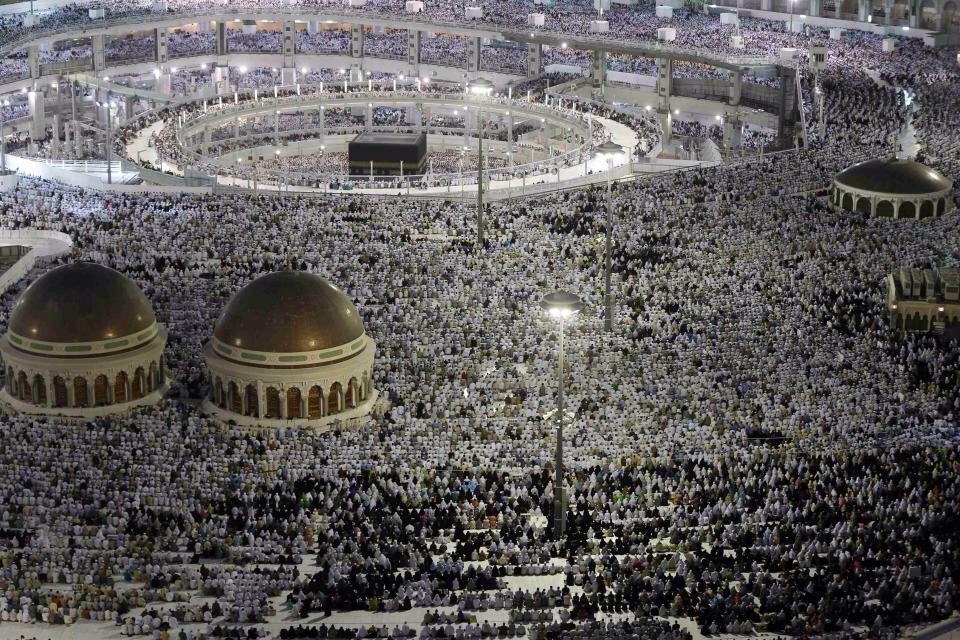
There are some scholars who believe the prophethood of Muhammad is related to Abraham’s near sacrifice of Ishmael. Therefore, Muslims commemorate Eid al-Adha or the Feast of Sacrifice. How is this argument articulated?
The argument that the prophethood of Muhammad is related to Abraham’s near sacrifice of Ishmael is based on the Islamic tradition that Abraham was commanded by God to sacrifice his son Ishmael, not Isaac as mentioned in the Bible.
This event is seen as a test of Abraham’s faith and obedience to God, and Ishmael’s willingness to be sacrificed is seen as a demonstration of his own faith and submission to God’s will.
In Islamic theology, this event is considered a precursor to the prophethood of Muhammad, who is seen as a descendant of Ishmael. The story of Abraham’s sacrifice is commemorated by Muslims during the Eid al-Adha, or the Feast of Sacrifice, which is one of the most important Islamic holidays.
The argument is articulated as follows:
- Abraham was commanded by God to sacrifice his son Ishmael, as mentioned in the Quran (Surah 37: 100 to 108).
- Ishmael was willing to be sacrificed, demonstrating his faith and submission to God’s will.
- This event is seen as a test of Abraham’s faith and obedience to God.
- The prophethood of Muhammad is related to this event, as he is a descendant of Ishmael.
- The story of Abraham’s sacrifice is commemorated by Muslims during the Eid al-Adha, which is a celebration of Abraham’s faith and obedience to God.
Therefore, the prophethood of Muhammad is seen as a continuation of the legacy of Abraham and Ishmael, and the story of Abraham’s sacrifice is seen as a precursor to the prophethood of Muhammad.
Genesis
first book of the Old Testament, which includes the stories of the creation of the world, Adam and Eve, the Flood, and the history of the Jewish patriarchs Abraham, Isaac, Jacob, and Joseph (who brought his people to Egypt).
The Significance of Ishmael in Islamic Faith
If Abraham had been instructed by God to sacrifice Ishmael instead of Isaac, it could be argued that Islam and Muhammad have a legitimate claim as a true religion and prophet. This argument can be further explained by examining the differences in the narrative of Abraham’s sacrifice between Islamic and Judeo-Christian traditions.
The story of Abraham being commanded to sacrifice his son is significant in Judaism, Christianity, and Islam. However, the key difference lies in the identity of the son involved. In Jewish and Christian traditions, it is Isaac who was nearly sacrificed, while in Islamic tradition, it is believed to be Ishmael. Although Ishmael’s name is not explicitly mentioned in the Quran, Muslims believe that he was the son whom Abraham was instructed to sacrifice.
If one were to argue for the legitimacy of Islam and Muhammad as a prophet based on the premise that Ishmael was the son intended for sacrifice, the argument might be structured as follows:
- Shared Abrahamic Roots: All three monotheistic religions—Judaism, Christianity, and Islam—trace their spiritual lineage to Abraham, recognizing him as a patriarch. The story of Abraham’s willingness to sacrifice his son at God’s command is seen as a test of faith in all three traditions.
- Islamic Narrative: The Quran (Surah 37, verses 100 to 113) recounts the story of Abraham’s willingness to sacrifice his son as a demonstration of his obedience to God. While the Quran does not name the son, the majority of Islamic traditions and interpretations identify the son as Ishmael, the eldest son of Abraham through Hagar. This interpretation is derived from the order of events in the Quran, indicating that the promise of Isaac’s birth occurred after the sacrifice story, leading to the conclusion that Ishmael was the son mentioned.
- Prophetic Lineage: In Abrahamic theology, the near sacrifice of Ishmael is regarded as a foreshadowing of Muhammad’s prophethood. This connection between Ishmael’s near-sacrifice and Muhammad’s lineage plays a vital role in confirming Muhammad’s position as a prophet in Islam, serving as a fundamental aspect of the faith and offering valuable insight into the validity of his prophethood.
- Preservation of Revelation: Muslims believe that the Quran is the final and unaltered word of God, preserved exactly as it was revealed to Muhammad. They argue that earlier scriptures, such as the Torah and the Bible, have been altered or misinterpreted over time. In this view, the Quran corrects these alterations, and the indication that Ishmael was the son to be sacrificed is seen as the correct version of the story.
- Continuity of Prophethood: Islam acknowledges the prophets of Judaism and Christianity but considers Muhammad to be the last prophet, who came to restore the original monotheistic faith and to correct deviations that had entered earlier religions. The story of Ishmael’s near-sacrifice, then, is seen as part of this corrective message.
- Theological Implications: The identification of the son in the story of Abraham’s sacrifice holds great significance as it symbolizes the heir of the Abrahamic covenant. In Islamic tradition, designating Ishmael as the son underscores his pivotal role in their religious history and bolsters the credibility of the Islamic faith for Muslims. This underscores the crucial role that lineage and inheritance play within religious narratives.
In conclusion, the narrative of Ishmael as the son intended for sacrifice strengthens Islam’s theological foundation and affirms Muhammad as a prophet. It shows Islam’s connection to the Abrahamic tradition, preservation of divine revelation, and role in restoring monotheistic beliefs. This narrative difference also highlights the interconnectedness and differences among the three Abrahamic faiths, shaping their unique theological identities.
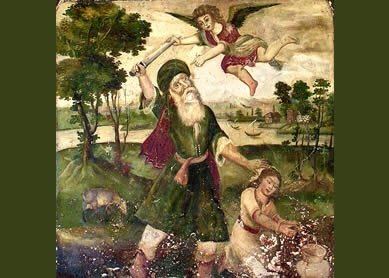
What is the position of Abraham within the Islamic faith?
In Islam, Abraham (known as Ibrahim in Arabic) is a highly revered prophet and a key figure in the faith. He is considered one of the greatest prophets and is often referred to as a “Friend of God” (Khalilullah). His significance in Islam can be summarized in several key points:
1. Father of Monotheism: Abraham is regarded as the patriarch of monotheism. He is seen as a model of faith and submission to the one God (Allah), and his commitment to monotheism is emphasized in Islamic teachings.
2. Prophet and Messenger: Abraham is recognized as one of the major prophets who received divine revelation. He is mentioned numerous times in the Quran, which highlights his role in calling people to worship the one true God and reject polytheism.
3. Ancestral Figure: Abraham is considered a spiritual ancestor of many nations. He is acknowledged as the forefather of both the Israelites through his son Isaac (Ishaq) and the Ishmaelites through his son Ishmael (Ismail). Muslims trace their lineage back to Ishmael.
4. Hajj and Rituals: The annual pilgrimage to Mecca, known as Hajj, includes rituals that commemorate events in the life of Abraham and his family. For example, the act of standing in the plain of Arafat and the symbolic stoning of the devil at Mina are associated with Abraham’s rejection of evil.
5. Sacrifice: The festival of Eid al-Adha, or the Feast of Sacrifice, commemorates Abraham’s willingness to sacrifice his son Ishmael in obedience to God’s command and God’s provision of a ram as a substitute. This act is celebrated as a demonstration of faith and submission.
6. Example of Faith: Abraham’s unwavering faith, his trials, and his obedience to God serve as an inspirational example for Muslims. His life and actions are explored in various Islamic teachings, and he is often cited in discussions about faith and righteousness.
Overall, Abraham holds a central position in Islam as a prophet, a model of monotheistic faith, and an important figure in the historical and spiritual lineage of Muslims.
 ABRAHAMIC THEOLOGY